
REVIEW · SPAIN
Cordoba Walking Tour with Arabian Baths Experience
Cordoba saves its biggest visual punch for the end: the Mezquita-Cathedral, where hundreds of striped arches fill a former mosque now fitted with a Christian cathedral. Getting there by way of the Alcazar, Jewish Quarter, synagogue, philosophers’ monuments, and El Zoco gives you a useful first look at the city’s layered past.
I like the tour’s strong route and its English-speaking guides. Guides such as Angel, Paqui, Rafa, and Christina have been praised for clear explanations, humor, and the ability to answer questions. I also like the optional Arabian baths, which give you a quiet two-and-a-half-hour finish after a long walk.
The main drawback is pacing. The group can grow when day-trippers arrive, and some departures spend too long waiting at the Alcazar before reaching the Mezquita. If the mosque is your top priority, a delayed start or a large final group could cut into the time and calm you hoped for.
Key points to know before booking
- The Mezquita comes last: You finish at Cordoba’s defining monument, with time to continue exploring after the guided portion.
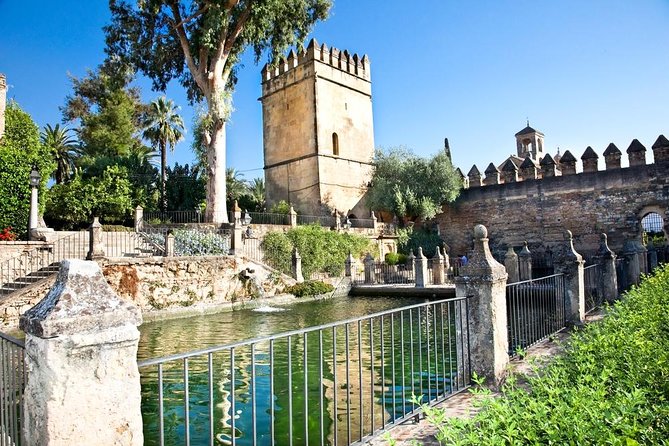
- The Alcazar starts the walk: See its towers, mosaics, marble sarcophagus, and Arabian baths before crossing into the old Jewish Quarter.
- The route is history-heavy: Roman, Islamic, Jewish, and Christian Cordoba all appear within a few compact streets.
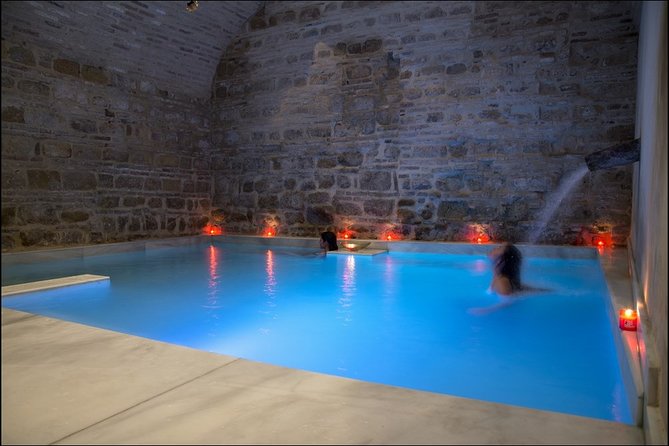
- The baths are optional: Add Baños Árabes de Cordoba for up to 2.5 hours of pools, steam rooms, chambers, and mint tea.
- Group size can change: The listed maximum is 20, but some outings have combined groups larger than that at the Mezquita.
- Summer adds flamenco: El Zoco market may include flamenco dancing in summer, but the performance is not a year-round feature.
Why this Cordoba route works
At $54.31 per person, this tour is priced as a guided introduction to Cordoba rather than a simple entry ticket. You are paying for a local guide, a planned route through the old center, and the chance to connect major monuments that can otherwise feel like separate stops.
The walking order makes sense. You begin at the Alcazar de los Reyes Cristianos, cross the historic center toward the Jewish Quarter, and finish at the Mezquita-Cathedral. That ending matters. The mosque-cathedral is the largest and most visually striking part of the visit, and reaching it after the smaller streets and palace helps you understand how Cordoba’s cultures overlap.
The advertised information is a little inconsistent about length. The summary says about two hours, while the main route is described as about three and a half hours, and the listed stop at the Mezquita takes about one hour. In practice, plan for a substantial half-day commitment, especially if the group pauses or waits for late arrivals.
The tour begins at 10:30 a.m. at the Alcazar, on Calle Caballerizas Reales. It ends at the Mosque-Cathedral on Calle Cardenal Herrero. There is no hotel pickup, and transport to the Arabian baths is not included, so the baths work best if you are comfortable finding your own way there after the walk.
A few more walking tours around Spain worth a look
- Barcelona Tapas and Wine Experience Small-Group Walking Tour
★ 5.0 · 5,804 reviews - Barcelona: Tapas Walking Tour with Food, Wine, and History
★ 4.8 · 4,261 reviews - Madrid Tapas & Wine Tasting Walking Tour – Small Group Local Bars
★ 5.0 · 3,644 reviews
Starting inside the Alcazar of the Christian Kings
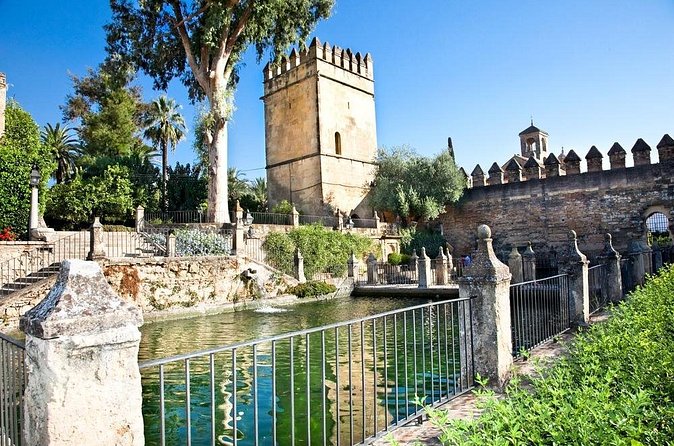
The Alcazar is a good first stop because it brings several periods of Cordoba together in one place. Built in the 14th century by Alfonso XI, the palace carries Christian royal associations, but its rooms and remains also point back to the city’s Roman and Islamic past.
Inside, you see Roman mosaics, a marble sarcophagus dating from the 3rd century, and Arabian baths. The baths are not the same experience as the optional Baños Árabes visit later. Here, they form part of the palace’s historic fabric. The later bath visit is designed for rest and leisure.
The three towers are another highlight. Your guide explains the former Torre de la Vela and its destruction in the 14th century, giving the stonework a story beyond its appearance. The Alcazar also provides a sense of scale, since the tour begins among royal walls before moving into narrow lanes.
This is where pacing can become an issue. Some departures have waited for people arriving from Seville by bus, and the delay has taken time away from the later parts of the route. You may also spend more time in the palace gardens than expected. That can be pleasant, but if you want the longest possible visit inside the Mezquita, listen for timing updates and keep the guide aware of your priorities.
Walking through the Jewish Quarter
From the Alcazar, the route enters the Jewish Quarter, often called the Juderia. The streets become tighter and more atmospheric, with white walls, small lanes, and monuments tied to Cordoba’s Roman, Islamic, and Jewish past.
The tour points out memorials to Seneca, the Roman philosopher; Averroes, the Islamic philosopher; and Maimonides, the Jewish philosopher. These names help show why Cordoba matters beyond one famous building. The city was shaped by people from several faiths and intellectual traditions, and the route gives you a brief introduction to each.
You also see one of Spain’s few surviving synagogues. This is a valuable stop because it is easy to walk through the Jewish Quarter and notice only its charm. The synagogue and the monuments add meaning to the lanes, turning a pretty stroll into a lesson about the communities that lived here.
The Bullfighting Museum is another passing point. You do not get a full museum visit as part of the walk, but the stop offers a little context about Spain’s controversial bullfighting tradition. If that subject interests you, you may want to return later rather than expect a detailed museum tour during the group walk.
The pace here depends heavily on the guide and group size. Paqui has been singled out for telling stories well, adding humor, and keeping people interested. Christina has also been praised for managing questions and explaining Spanish history clearly. Guides vary, but the strongest ones make these short stops feel connected rather than rushed.
Reaching the Mezquita-Cathedral
The Mezquita is the reason many people choose this tour. Its origins reach back to the 600s, and the building began as a mosque before being converted after the Christian conquest of Cordoba in the 13th century. Later changes added Gothic, Renaissance, and Baroque elements.
That mixture is exactly what makes the building so unusual. Inside, the famous repeating arches belong to the mosque’s Islamic design, while the cathedral inserted into the center announces a later Christian period. You are not looking at a perfectly preserved single-era monument. You are looking at a building altered by power, worship, and time.
The guided visit is listed at about one hour. That is enough to understand the main design and historical changes, but not enough to examine every chapel, inscription, and side space at leisure. I like the fact that the tour ends here, because you can stay afterward and continue on your own if opening conditions and your schedule allow.
Several tours use radio or audio devices at the Mezquita. These are especially useful when the group becomes large or the building is crowded. One important practical point: some departures begin with a small group at the Alcazar and then combine with other participants at the mosque. The listed maximum is 20, yet some outings have reached more than 25, and even close to 30, at the final stop.
A larger group does not automatically ruin the visit. A strong guide can still manage the route, and Paqui has been praised for keeping order while explaining the building. But the experience becomes less personal, and it may take longer to gather everyone, distribute audio equipment, or move between rooms.
If you want the Mezquita at its best, keep your expectations realistic. The group may be excellent and the guide may be first-rate, but the mosque is the part most vulnerable to delays earlier in the day. The tour’s structure puts this highlight at the end, which is satisfying, but it also means earlier waiting can matter.
Same streets, a different route:
- Granada: Albaicín and Sacromonte Guided Sunset Walking Tour
★ 4.9 · 2,962 reviews - Toledo Tour & Vineyard Walk with Wine Tasting from Madrid
★ 5.0 · 2,546 reviews - Madrid Walking Tour from Puerta del Sol to Retiro Park
★ 5.0 · 2,285 reviews - Barcelona: Food Walking Tour with Tapas and Wine
★ 4.9 · 2,180 reviews
El Zoco and the seasonal flamenco stop
The walk concludes at El Zoco market, a small setting for handicrafts and artistic gifts. In summer, the tour may include flamenco dancing there. This gives the route a lively cultural finish, but it is important not to book the tour solely for this feature.
The performance is seasonal, and the information provided does not promise flamenco at every departure. Outside summer, El Zoco is still a useful final stop, but you should think of the market as an optional extra rather than the main reason to come.
The tour officially ends at the Mezquita area, and the market appears as part of the route description. Since the supplied details describe the Mosque-Cathedral as the end point, confirm the exact day’s walking order with your guide if the market matters to you.
Adding Baños Árabes for a quieter finish
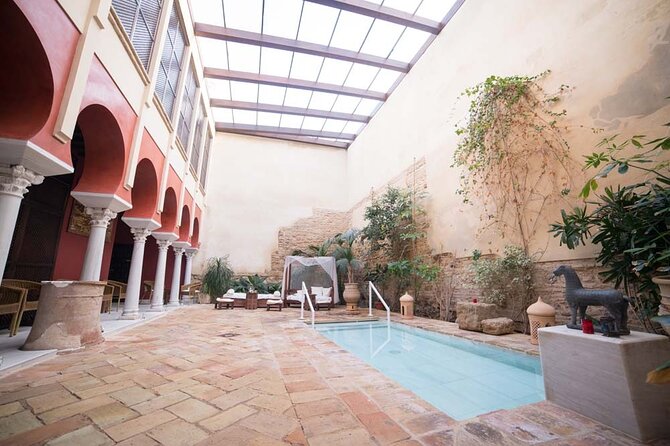
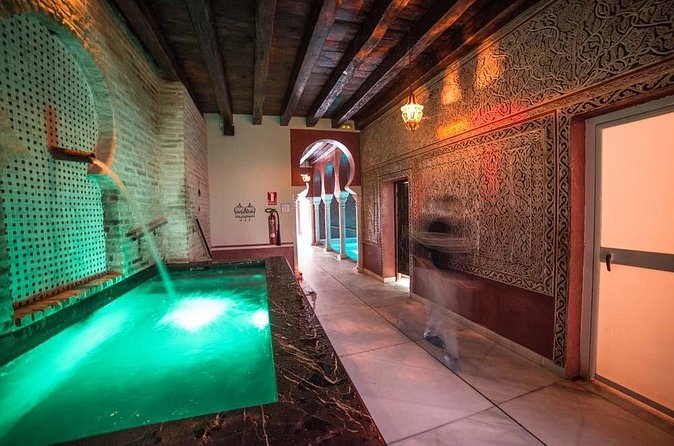
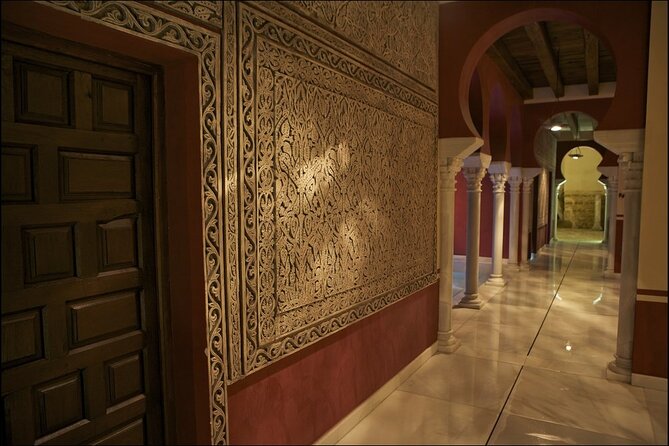
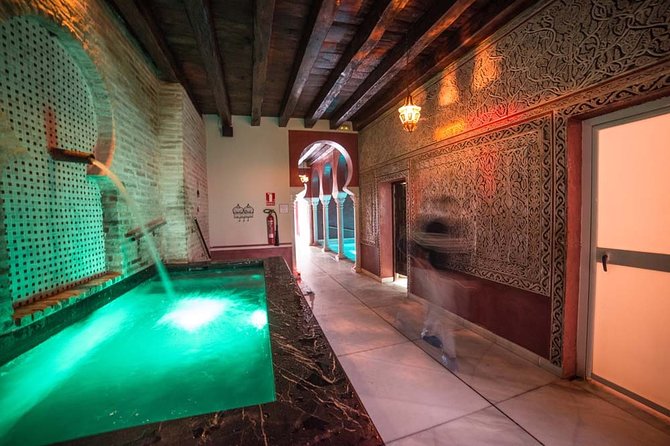
The optional Arabian baths change the mood completely. After several hours of streets, monuments, commentary, and group movement, Baños Árabes de Cordoba offers thermal plunge pools, aromatic steam rooms, and decorated chambers.
You can spend up to 2.5 hours there at leisure, with complimentary mint tea included. The bath visit is not guided in the same way as the city walk. You make your own way to the baths, and transport from the final tour stop is not included.
This add-on suits you if you want a rest period built into a sightseeing day. It is also a good choice if you enjoy historic bath settings but do not need a fully traditional hammam ritual. One guide described the experience as enjoyable but not comparable to an authentic hammam, so set your expectations accordingly.
Children under 12 may not always be allowed inside. The age rule can vary by occasion, so contact the local provider before booking if you have children in your group. The baths are best treated as a separate relaxation experience, not as an extension of the historical tour.
Guides, group size, and the human factor
The guides are one of the tour’s strongest features. Angel has been praised for mixing history with relaxed humor. Rafa has been described as warm, informed, and enthusiastic about Cordoba. Paqui is repeatedly noted for making complex history easy to follow and for answering questions without losing the group.
That said, guide quality and group control can vary. One departure had a guide who did not provide enough historical detail, while another moved slowly and spent too much time talking without making the material engaging. These differences matter because the tour covers a lot in one morning.
The tour is offered in English, and the group is sometimes divided by language at the meeting point. That can help at the start. Still, the group may grow later when participants from other departures join for the Mezquita.
A maximum of 20 is stated, but actual experiences have sometimes involved larger groups. If you prefer quiet, slow looking, or a chance to ask many questions, a private guide or a smaller specialist tour may suit you better. If you want a broad first orientation and can tolerate some group management, this format gives you a lot in one booking.
Pace, heat, and what to bring
This is a walking tour with several hours on your feet. Even people who enjoy the route have found it intense, especially when the schedule includes long stops, waiting, and the full visit to the Mezquita.
Wear comfortable shoes and bring water. The tour details do not promise food or drinks, though the route may allow brief breaks. One outing included time for coffee, toilets, water, and ice cream, but you should not assume every departure follows the same pattern.
Summer heat is another concern. Cordoba can be very hot, and some sections of the Jewish Quarter and open palace grounds offer less shade than you may want. The 10:30 a.m. start is better than beginning later, but the walk can still run into the warmest part of the day.
The audio equipment used at the Mezquita can make a large group easier to follow. Outside the mosque, you may need to stay close enough to hear the guide, especially in busy streets.
Is $54.31 good value?
The price makes sense if you want three major Cordoba sights connected by one English-speaking guide. You get the Alcazar, Jewish Quarter, and Mezquita in a single route, rather than spending time working out the order and background on your own.
The value is strongest for a first visit. You receive historical context, help finding the monuments, and a clear endpoint at the city’s most important sight. The tour also saves you from treating the Mezquita as an isolated building with no connection to the palace or Jewish Quarter.
The value is weaker if you mainly want a long, unhurried Mezquita visit. The route may spend a lot of time at the Alcazar, and group changes can delay the final stop. In that case, compare the cost with a shorter Mezquita-focused visit and use your saved time for independent exploring.
The baths are an extra choice, not the core value of the city walk. Add them if you want a two-and-a-half-hour pause and like the idea of pools, steam, chambers, and mint tea. Skip them if you have already had a similar hammam experience or want to spend your afternoon seeing more of Cordoba.
Who should book this Cordoba walking tour?
I would choose this tour for a first-time visitor who wants a broad introduction in one morning and prefers a guide to explain the historical links. It also works well if you have limited time in Cordoba, since the route covers the Alcazar, Jewish Quarter, and Mezquita without requiring separate planning.
The tour suits history fans, architecture fans, and anyone curious about how Roman, Islamic, Jewish, and Christian Cordoba fit together. It also suits people who like a little humor and conversation from a local guide rather than a silent audio tour.
I would hesitate if you dislike group walks, need a guaranteed small group, or want to set your own pace inside the mosque. I would also think twice about the bath add-on if you want an authentic hammam rather than a polished bathhouse experience.
Book it if you can accept a full and sometimes busy half-day, and if seeing the Mezquita with a guide matters more than having total control of the schedule. Skip it if the main goal is a quiet, detailed visit to the mosque alone. The strongest plan is to take the walk for orientation, then remain near the Mezquita afterward for your own extra look.
FAQ
How long does the Cordoba walking tour last?
The tour information gives conflicting durations. The summary says approximately two hours, while the main route is described as about three and a half hours, with about one hour listed for the Mezquita stop. Plan for a substantial half-day.
What time does the tour start?
The stated start time is 10:30 a.m.
Where does the tour begin?
You meet at the Alcázar de los Reyes Cristianos, on Calle Caballerizas Reales in Cordoba’s historic center.
Where does the tour end?
The stated end point is the Mosque-Cathedral Monumental Site of Córdoba, on Calle Cardenal Herrero.
Is the tour offered in English?
Yes. The experience is offered in English.
Is entry to the Arabian baths included?
The baths are an upgrade rather than part of the basic walking tour. The upgrade allows up to 2.5 hours at Baños Árabes de Cordoba, and you make your own way there.
Are children allowed in the Arabian baths?
Children under 12 may not always be admitted. Contact the local provider before travel if children are in your group.
Can I cancel for a full refund?
Yes, if you cancel at least 24 hours before the experience start time. Cancellations or changes made less than 24 hours before the start are not refundable.
Just added around Spain
- Walking tour in Alhambra, Nasrid Palaces and Generalife★ 3.0 · 135 reviews
- Sunset Walking Tour in Albaicín & Sacromonte★ 5.0 · 95 reviews
- Granada’s Hidden Treasures: Albayzin and Sacromonte Walking Tour★ 4.5 · 575 reviews
- Albayzin and Sacromonte Guided Walking Tour in Granada★ 4.5 · 98 reviews
- Albaicín & Sacromonte Walking Tour★ 4.5 · 87 reviews
- Girona History, Legends, and Food Walking Tour with food tasting★ 5.0 · 195 reviews
- Game Of Thrones Walking Tour in Girona★ 5.0 · 406 reviews
- 3 Tapas Cartagena walking tour★ 4.5 · 105 reviews
Walking Tours, compared.

Magical London: Harry Potter Guided Walking Tour
Read our review →
Reykjavik Food Walk – Local Foodie Adventure in Iceland
Read our review →
History and Hauntings of Salem Guided Walking Tour
Read our review →
New Orleans Premier Ghost, Voodoo and Vampire Walking Tour
Read our review →
Amsterdam Anne Frank: Small-Group Walking Tour & Local Guide
Read our review →

Edinburgh Castle: Guided Walking Tour with Entry Ticket
Read our review →
Anne Frank’s Story – Guided Walking Tour through Amsterdam
Read our review →Browse the lists this tour appears in