
REVIEW · BUDAPEST
Virtual Reality Walking Tour
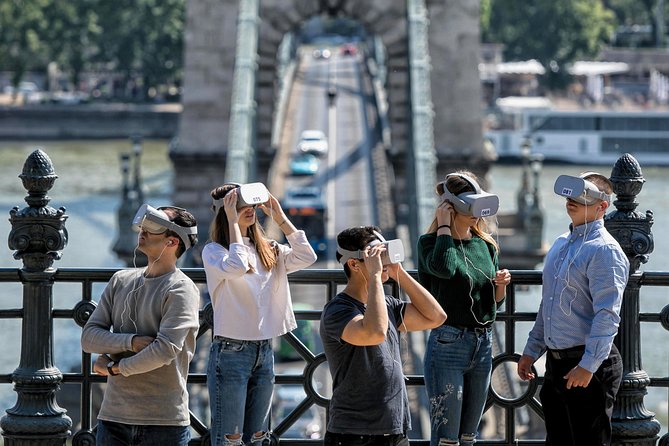
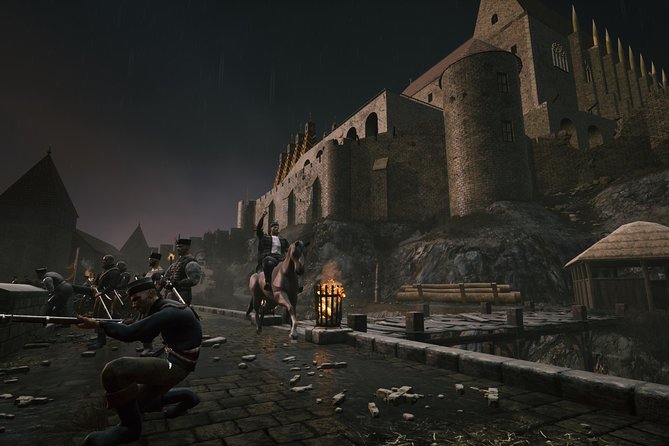
Buda Castle is impressive in stone, but this experience adds something you cannot get from simply looking at the walls: 360-degree virtual reality scenes that show past events as moving pictures around you. I like that the headset is supplied and that audio commentary helps connect each visual to the history.
I also like the manageable length, roughly 75 to 95 minutes, and the small maximum group of 20 people. The main drawback is that this is not a long walking tour through several Budapest sights. It is a focused VR presentation at one location, and the headset experience may not suit anyone with epilepsy or children under 13.
Key points to know before booking
- Buda Castle becomes the setting for a 360-degree, 3D history show, rather than just a backdrop for photographs.
- A VR headset is provided, so you do not need to rent or bring special equipment.
- English audio commentary explains the scenes, helping you follow the action instead of watching unexplained images.
- The experience lasts about 1 hour 15 minutes to 1 hour 35 minutes, making it easy to fit into a Budapest sightseeing day.
- The group can include up to 20 people, small enough for help with the equipment and questions.
- The meeting point is Lánchíd u. 23, near public transportation, with the activity ending at the same place.
Seeing Buda Castle through a headset
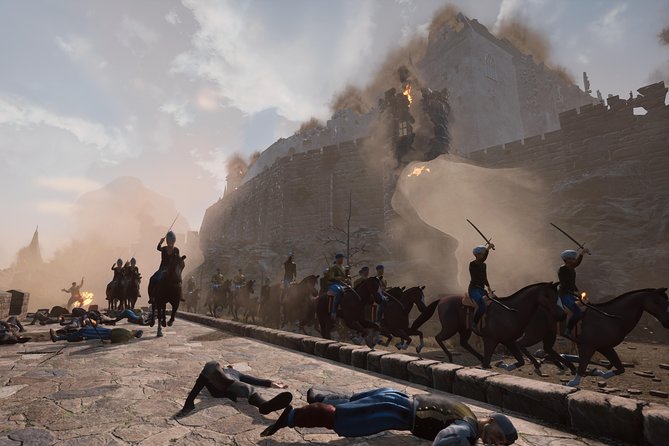
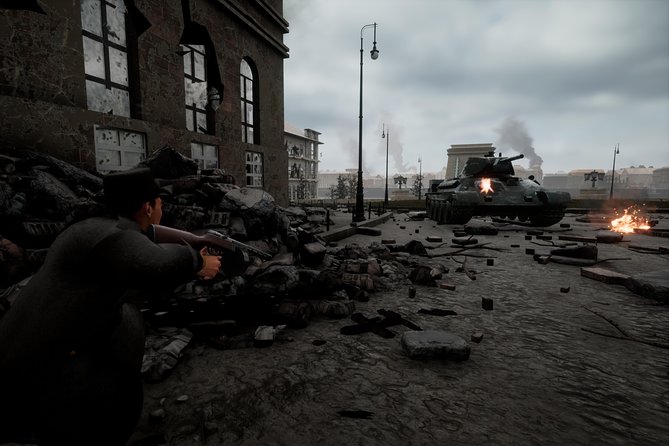
The clever idea here is simple: instead of hearing only about Buda Castle’s past, you watch historical scenes unfold around you. The 360-degree format is meant to put you inside the action, while the 3D presentation adds depth to the images.
That matters at Buda Castle because the site carries a long and turbulent past, but the remains you see today cannot show every earlier moment. A virtual reconstruction can help you picture events that are otherwise reduced to dates, names, and damaged walls. I like this approach for visitors who learn better through images than through a long spoken lecture.
The experience is presented as a walking tour, but the supplied details describe one main activity at the castle rather than a long route with many separate stops. You should expect a concentrated programme built around the VR scenes, not a full-day tour of Castle Hill.
The format also gives the guide a useful role. The guide helps explain what is happening and assists with each step of the headset experience. That practical help matters because virtual reality can be confusing if you are left to work out the equipment alone.
A few more walking tours around Budapest worth a look
- Budapest: Buda Castle Walk with Saint Stephen’s Hall
★ 4.5 · 3,012 reviews - Big Bus Budapest Hop-On Hop-Off Bus and Walking Tour
★ 3.5 · 2,206 reviews - Budapest: Buda Castle District Walking Tour
★ 4.6 · 2,108 reviews
How the 75 to 95 minutes are used
The advertised duration is approximate, lasting from about one hour and 15 minutes to one hour and 35 minutes. The difference likely reflects the pace of the group and the time needed to explain the equipment, but the exact running order is not provided.
You begin at Budapest’s Lánchíd u. 23, 1013 Hungary. From there, the programme centers on Buda Castle and its virtual scenes. The experience ends back at the same meeting point, which makes planning easier if you have another booking afterward.
The useful point is the scale. You are not committing half a day to a museum or a large guided route. At the same time, this is longer than a quick photo stop, so you have time to watch the scenes, listen to the commentary, and ask for help if needed.
I would leave a little breathing room around the scheduled time. The duration is given as an estimate, and a VR activity can take different amounts of time depending on the group. That is especially useful advice if you are arranging a tight sequence of castle visits, meals, or transport.
Why the virtual reality scenes help
Audio commentary alone can explain a battle, rebuilding project, or political change, but it still asks you to create the picture in your head. The VR scenes give you a visual frame of reference. You can better understand what a place may have looked like and how events might have unfolded around the castle.
The strongest part of the experience is the link between the real site and the digital images. You are not watching a general history film in an unrelated room. The subject is Buda Castle, so the location gives the virtual scenes a physical anchor.
That combination is particularly useful if you are visiting Budapest for the first time. The castle can otherwise feel like a large historic complex that requires context. The VR presentation offers a clear way to connect the building you see with the events explained through the headset.
Still, it is worth keeping expectations in check. Virtual reality does not replace seeing the actual castle, and the supplied information does not promise a detailed architectural tour or access to every part of the site. I would treat this as an interpretive experience that adds background, not as your only visit to Buda Castle.
The guide, headset, and audio commentary
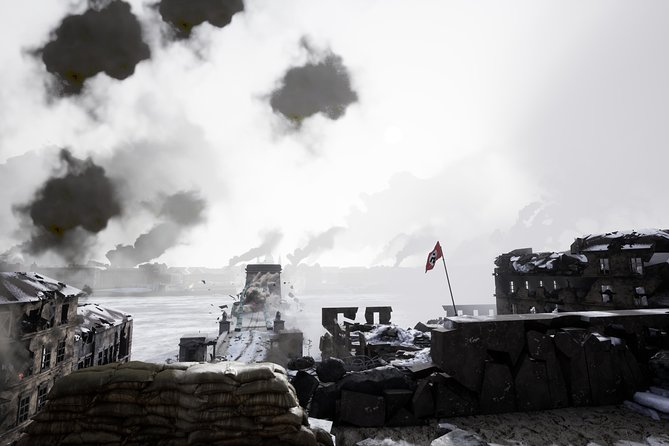
You do not need to arrange equipment before arriving. A headset is included, which removes one of the obvious hassles of trying a VR activity in a city. The guide helps you use it and explains the scenes as they appear.
The audio commentary is another important part of the experience. The images may be striking, but without explanation you could miss the historical point of each sequence. The commentary gives the programme structure and helps you understand what you are seeing.
The available language is English. If you are comfortable following spoken English, this keeps the presentation easy to follow. If you prefer a self-guided experience with no narration, this may feel more structured than you want.
The guide also appears to be central to the human side of the programme. The available comments describe staff as friendly, helpful, and willing to explain what was happening. That is encouraging for anyone who has never used a VR headset, although no individual guide names are provided.
Same streets, a different route:
- Budapest City Landmarks Walking Tour in 2 Hours
★ 5.0 · 2,048 reviews - 3-Hour Orientation Walking Tour of Buda and Pest
★ 4.8 · 1,834 reviews - Budapest: 3-Hour Grand City Tour and Castle Walk
★ 4.3 · 1,437 reviews - Budapest Historical Sightseeing – Free Walking Tour
★ 5.0 · 1,302 reviews
What makes the experience different from a standard castle visit
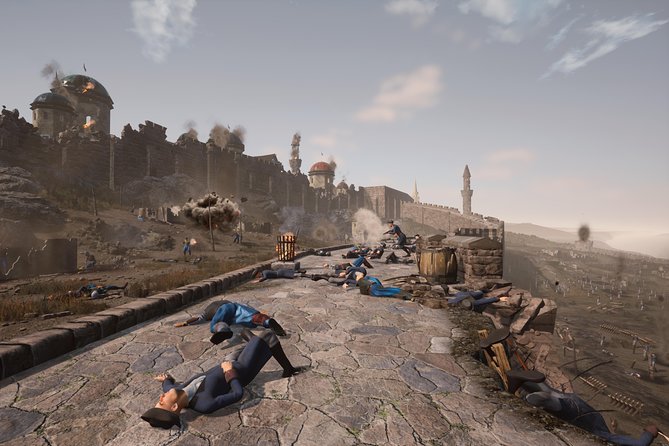
A standard sightseeing visit gives you the actual stones, views, and rooms. This programme adds a visual explanation of the past. I like that it does not ask you to choose between technology and history. The headset is used as a tool for understanding the site.
The 360-degree format should feel more active than watching a flat screen. You can look around the scene rather than facing one fixed image. That can make the historical moments easier to remember, especially if you respond well to visual storytelling.
There is also a practical benefit for mixed groups. One person may want more historical context, while another may find a conventional lecture slow. The VR scenes offer a change of pace, and the commentary keeps the activity tied to Budapest rather than turning it into a generic technology demonstration.
The compromise is that the experience may feel less personal than a long outdoor walk led by a guide. You are spending part of the programme focused through a headset, not constantly looking at the real city. For some people, that is the attraction. For others, it may be a reason to choose a traditional castle tour instead.
Price and value at $48.37

At $48.37 per person, this is not the cheapest way to see Buda Castle. You are paying for a specialized presentation, the VR equipment, staff support, and an English explanation in a small group of no more than 20 people.
The value depends on what you want from your Budapest sightseeing. If you mainly want outdoor views and photographs, the price may feel high for an activity lasting roughly 75 to 95 minutes. You can see the castle area without booking a VR programme.
If you enjoy interactive history, the calculation looks better. The headset is already provided, the programme has a clear focus, and the virtual scenes may help you understand the site faster than reading several panels or guidebook pages. The cost is easier to justify if you see it as a special presentation rather than simple admission.
I would also consider the time saved. A well-focused hour and a quarter can give you historical context without taking over your day. That makes the activity more useful for a short Budapest stay, when you want something distinctive but cannot spend hours in every museum.
Who will get the most from it
I would recommend this experience to adults and older children who enjoy visual storytelling, technology, and history presented together. The minimum suggested age is 13, so it is not designed for young children.
It also suits visitors who want help making sense of Buda Castle. The combination of a real location, VR images, and spoken explanation gives you several ways to follow the story. You do not need to bring equipment or prepare a detailed history lesson beforehand.
People with a moderate level of physical fitness are advised to take part. The supplied information does not give a detailed breakdown of walking, stairs, or standing time, so you should not assume the programme is fully seated or effortless.
This activity is not recommended for anyone suffering from epilepsy. That is an important safety point because flashing images, 3D effects, or the enclosed headset experience can be unsuitable for some people. You should also think carefully about motion sensitivity or discomfort with VR, although no specific policy is provided for those conditions.
Meeting point and planning your Budapest day
The starting address is Lánchíd u. 23, Budapest, 1013 Hungary. The location is near public transportation, which is useful when you are connecting the activity with other parts of the city.
Because the experience begins and ends at the same point, you can plan around it more easily than a tour that drops you far from where it started. You might schedule it before another Buda Castle visit, after seeing nearby sights, or as a focused history stop within a larger day.
The booking includes a mobile ticket, so you do not need to arrange a printed ticket according to the provided details. Confirmation is sent at the time of booking, which gives you the basic information you need before setting out.
The group maximum is 20 people. That is not a private tour, but it is small enough that the guide should be able to help with the headsets and keep the presentation organized. If you value individual attention, arrive ready to ask questions during the activity rather than expecting a private lesson.
Weather, cancellations, and timing risks
The experience requires good weather. If poor weather causes cancellation, you are offered another date or a full refund. The same applies if the minimum number of people is not reached, with a different date or experience also offered.
You can cancel for a full refund if you do so at least 24 hours before the start time. Cancellations made less than 24 hours before the start are not refunded, and changes inside that period are not accepted.
Those rules make advance planning important. The experience is booked, on average, 14 days ahead, so popular dates may need attention when you set your Budapest schedule. At the same time, the weather provision gives you some protection if conditions make the activity impossible.
All cut-off times use local Budapest time. Keep that in mind if you are booking while arranging an international trip from another time zone.
What the strongest praise points to
The most consistent strengths are the entertaining presentation, the clear narration, and the helpful staff. The virtual scenes are not presented as decoration alone. They are meant to make the events easier to picture and the history easier to follow.
The timing also receives positive attention. The programme is long enough to feel worthwhile but short enough to fit into a busy sightseeing day. That balance is one of its practical advantages.
The available rating is 4.8 from 434 reviews, with 99 percent of customers recommending the experience. Those figures suggest broad satisfaction, but they do not remove the main question: do you enjoy learning through a headset?
I would book it if you want a memorable way to understand Buda Castle and you are comfortable with VR. I would skip it if your main goal is a leisurely outdoor walk, detailed architecture, or a longer guide-led exploration of Castle Hill.
Should you book the Buda Castle VR tour?
Book this experience if you want a short, image-led history programme with equipment included and a guide available to help. It is especially practical for first-time visitors who want context without giving up most of a day.
Think twice if you dislike headsets, have epilepsy, are under 13, or want a traditional walking tour with several outdoor stops. At $48.37, the price makes the most sense when you value the technology and the visual explanation.
For the right audience, this is a useful addition to a Budapest itinerary. You see the real setting, then use virtual reality to picture parts of its past that the surviving building cannot show you.
FAQ
Where does the Virtual Reality Walking Tour begin?
The tour begins at Budapest, Lánchíd u. 23, 1013 Hungary.
Where does the activity end?
The activity ends back at the meeting point.
How long does the experience last?
It lasts approximately 1 hour 15 minutes to 1 hour 35 minutes.
How much does the tour cost?
The listed price is $48.37 per person.
Is a VR headset included?
Yes. A virtual reality headset is provided, so you do not need to rent equipment.
What language is offered?
The experience is offered in English, including the audio commentary.
Is the tour suitable for children?
It is not recommended for anyone under 13 years of age.
Is the experience suitable for people with epilepsy?
No. It is not recommended for people suffering from epilepsy.
How many people can join the activity?
The maximum group size is 20 people.
Can I cancel for a full refund?
Yes, if you cancel at least 24 hours before the experience start time. Cancellations made less than 24 hours before the start are not refunded. If poor weather or an insufficient minimum number of participants causes cancellation, you are offered another date or a full refund.
Just added around Budapest
- Small-Group Culinary Walking Tour in Budapest★ 5.0 · 148 reviews
- Walking Tour Budapest incl. the Shoes on the Danube Bank★ 5.0 · 387 reviews
- Walking tour in the Buda Castle incl. Fisherman’s Bastion★ 5.0 · 467 reviews
- Budapest Ruin Bars Evening Walking Tour with Drinks & Street Food★ 5.0 · 104 reviews
- Budapest walking tour: Parliament and Shoes Memorial★ 5.0 · 387 reviews
- Essential Walking Tour★ 5.0 · 101 reviews
- Budapest Private Full Day City Sightseeing Tour Walking or by Car★ 5.0 · 299 reviews
- Buda Castle District Walk with Entry to Matthias Church★ 5.0 · 170 reviews
Walking Tours, compared.

Magical London: Harry Potter Guided Walking Tour
Read our review →
Reykjavik Food Walk – Local Foodie Adventure in Iceland
Read our review →
History and Hauntings of Salem Guided Walking Tour
Read our review →
New Orleans Premier Ghost, Voodoo and Vampire Walking Tour
Read our review →
Amsterdam Anne Frank: Small-Group Walking Tour & Local Guide
Read our review →

Edinburgh Castle: Guided Walking Tour with Entry Ticket
Read our review →
Anne Frank’s Story – Guided Walking Tour through Amsterdam
Read our review →Browse the lists this tour appears in