
REVIEW · WALKING TOURS
Tirana Walking Tour
Tirana’s story is written in sharp contrasts: Italian government buildings face stern communist blocks, an Ottoman mosque sits near new high-rises, and the former dictator’s neighborhood now hums with cafes. This three-hour walking tour gives you a useful map of those changes, with guides such as Gloria, Ilir, Thomas, and Iris bringing personal memories and local context.
I like two things especially. First, the route covers both the famous center and the more revealing corners, including Bunk’Art 2, Postbllok, the Pyramid, and Blloku. Second, the guide can adjust the pace and conversation, often stopping for coffee or a cold drink while answering questions about food, customs, politics, and daily life. The main consideration is that this is a lot of ground for three hours, and one guest found it harder to hear explanations while walking. Ask for a walk, stop, and talk rhythm if needed.
Key points at a glance
- Tirana’s history in one walk: Move from Ottoman-era landmarks to Italian architecture, communist buildings, and today’s construction boom.
- Personal guiding matters: Guides including Gloria, Ilir, Thomas, Iris, and Aron are praised for clear English, local insight, and warm conversation.
- A useful first-day tour: The route helps you get your bearings around Skanderbeg Square, Blloku, and the central public spaces.
- Coffee is part of the experience: Time is set aside in Blloku for a coffee or cocktail and questions.
- Good value at $17: A qualified guide, a broad central route, and practical local tips make the price easy to justify.
- Plan for walking: Wear comfortable shoes, and remember that meals, drinks, personal expenses, and optional entry costs are not included.
Why Tirana makes a good walking tour city
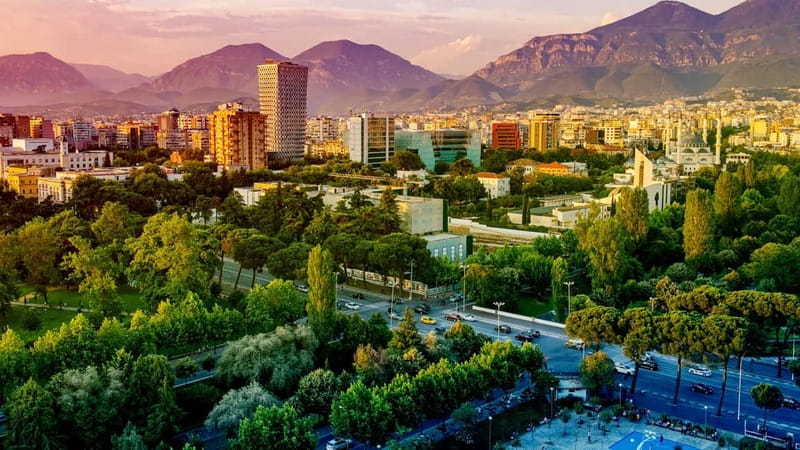
Tirana is compact enough to explore on foot, but its story is not simple. The capital has changed quickly, and the most useful way to understand it is to place old and new buildings side by side.
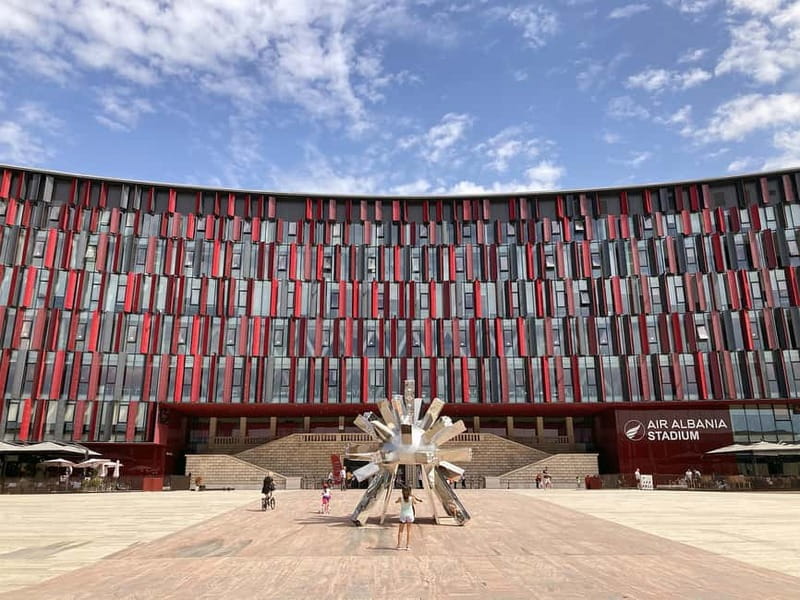
The tour begins near the Tirana International Hotel, close to Skanderbeg Square. From there, you can see how the city’s central buildings reflect different periods. Italian architects helped reshape Tirana in the 1920s. Later, communist planners placed large, heavy public buildings around the square. Today, glass towers, redesigned plazas, cafes, and ambitious construction projects add another layer.
I like this approach because you are not simply ticking off monuments. You are learning why the city looks the way it does. Albania’s move from an isolated communist state to a more open economy happened within living memory, and guides often explain that change through their own childhood or adult experiences.
The tour is also useful for practical orientation. You pass restaurants, cafes, shopping areas, public squares, museums, and religious buildings. If you take it early in your stay, you can return later to places that deserve more time.
A few more walking tours around the world worth a look
- Magical London: Harry Potter Guided Walking Tour
★ 4.7 · 22,044 reviews - Reykjavik Food Walk – Local Foodie Adventure in Iceland
★ 5.0 · 18,952 reviews - History and Hauntings of Salem Guided Walking Tour
★ 5.0 · 14,564 reviews
Skanderbeg Square and the clash of architectural eras
The first part centers on Skanderbeg Square, named for Albania’s national hero. The route takes in the National History Museum and the Palace of Culture of Tirana, two large buildings that help explain the city’s communist period.
The National History Museum is especially useful for first-time visitors because its exterior and location introduce Albania’s national story. On this walking tour, the main focus is sightseeing and explanation rather than a long museum visit. If you want to study the exhibits in detail, allow separate time on your own.
The Palace of Culture has an imposing communist-era appearance. Across the central area, Italian government buildings from the 1920s offer a sharp contrast. This is one of the tour’s best teaching moments: you can see the shift from an older Ottoman-influenced town to a planned socialist capital, then to a modern European city.
The guide’s explanation is what gives these buildings meaning. Thomas, Ilir, Gloria, and Iris have each been praised for linking architecture with political change and everyday life. I would not rush this section for photographs alone. Stop, look around, and ask why the buildings were designed in such different styles.
Et’hem Bey Mosque and the old heart of Tirana
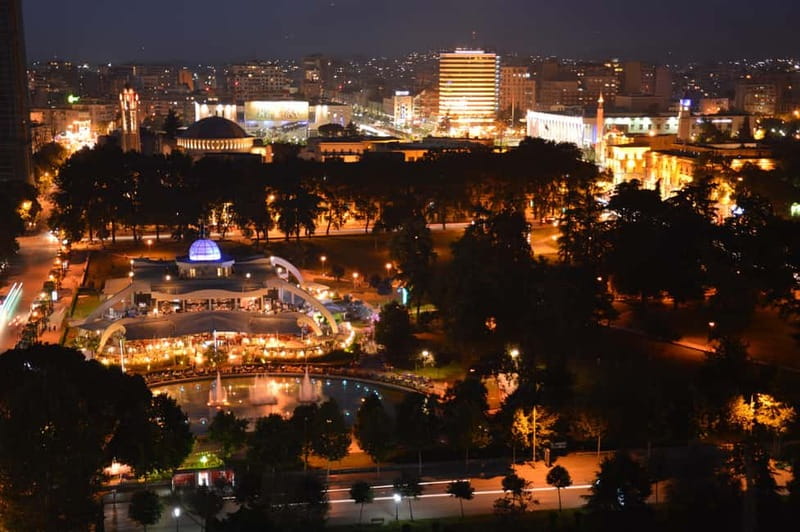
Near Skanderbeg Square, the Et’hem Bey Mosque recalls Tirana’s Ottoman past. Along with the Watch Tower, it points to the city’s growth during the 17th and 19th centuries.
The mosque gives the route an important change of mood. After the broad public square and formal government buildings, you reach a place connected with older religious and urban life. The nearby Watch Tower adds another visual marker of Tirana before the modern capital took shape.
The tour also includes Namazgah Mosque, Saint Paul’s Cathedral, and the Resurrection of Christ Orthodox Cathedral. Seeing Muslim, Catholic, and Orthodox places of worship within the same city walk helps you understand Albania’s religious mix. The guide can explain customs and the role of religion in Albanian society, though the exact amount of interior access may depend on opening conditions and the timing of the visit.
Tirana’s historic center is not preserved as one perfect old quarter. Instead, older traces appear between newer streets, public buildings, and redevelopment. That is part of the point. You are seeing a city that has changed fast rather than a museum frozen in one period.
Bunk’Art 2 and the darker communist years
Bunk’Art 2 is one of the route’s most important stops. Its subject is the communist period and the system of surveillance and political control that shaped life in Albania.
The visit adds weight to the more cheerful cafe-and-architecture side of Tirana. The city’s relaxed present can make its recent past easy to underestimate. A stop connected with political imprisonment and state control helps correct that balance.
Entry costs for optional activities are not included in the $17 tour price. Check the conditions when booking if you want to go inside rather than make a photo stop. If the schedule or opening hours limit the visit, the guide can still provide context from the outside, but you should allow extra time on another day if this subject matters greatly to you.
The House of Leaves Museum later reinforces this part of the story. It focuses on surveillance during the communist period, making it another place worth returning to if you want more than a brief introduction.
Same streets, a different route:
- New Orleans Premier Ghost, Voodoo and Vampire Walking Tour
★ 4.5 · 12,856 reviews - Amsterdam Anne Frank: Small-Group Walking Tour & Local Guide
★ 4.8 · 12,789 reviews - Edinburgh: Harry Potter Magical Guided Walking Tour
★ 4.8 · 11,944 reviews - Edinburgh Castle: Guided Walking Tour with Entry Ticket
★ 4.7 · 11,699 reviews
Tirana Castle, Tanners’ Bridge, and the older city
The route continues toward Tirana Castle and Tanners’ Bridge. These stops reveal a less monumental side of the city.
Tanners’ Bridge is a modest stone bridge, but that is exactly why it works well in a walking tour. It recalls the working city that existed before the grand avenues and modern towers. Do not expect a huge medieval complex. Think of it as a small surviving clue to earlier urban life.
Tirana Castle offers time for photographs, a short break, and free time for shopping. It is also a useful contrast with the political buildings around the main square. The stop can give your feet a rest while keeping you close to the center of the story.
The schedule includes several photo stops and short visits. That means the experience is more about connections between places than extended time inside each attraction. If you prefer long museum visits, this tour should be your orientation walk, not your entire Tirana program.
The Pyramid, Postbllok, and public memory
The Pyramid of Tirana is one of the city’s most striking symbols. Built during the communist era and later repurposed, it now reflects the capital’s effort to deal with its past while making room for new uses.
The stop is good for photographs, but the building also raises a larger question: what should a city do with difficult monuments? The guide can place the Pyramid within Albania’s political story and explain how Tirana is changing around it.
Postbllok, also called Checkpoint, adds another reminder of repression. Its simple memorial form can be easy to pass without context, so this is a stop where a guide earns the fee. You get more than a picture. You get an explanation of what the site represents and why it matters.
These two places help keep the tour from becoming a parade of attractive squares and cafes. Tirana is lively and welcoming, but its recent past is close to the surface. The route gives that past a proper place.
Mother Teresa Square and the city’s grand southern end
Mother Teresa Square sits farther from the tight center and gives the walk a more formal, open setting. The square is linked with major institutions and broad public spaces, making it a good place to see how Tirana presents itself as a capital.
Saint Paul’s Cathedral is also included in this part of the route. The building adds another religious and architectural layer, while Mother Teresa’s name points to Albania’s international connections and Catholic heritage.
By this stage, you will have seen the city through several lenses: national identity, religion, communist planning, modern redevelopment, and public memory. The guide’s ability to connect those subjects matters more than the number of photographs you take.
The route is wheelchair accessible, which is useful information for anyone planning around mobility needs. Still, a three-hour city walk can be tiring, and conditions can vary between streets and stops. Ask about the precise meeting point and route when you book.
Blloku, Enver Hoxha’s villa, and today’s cafe culture
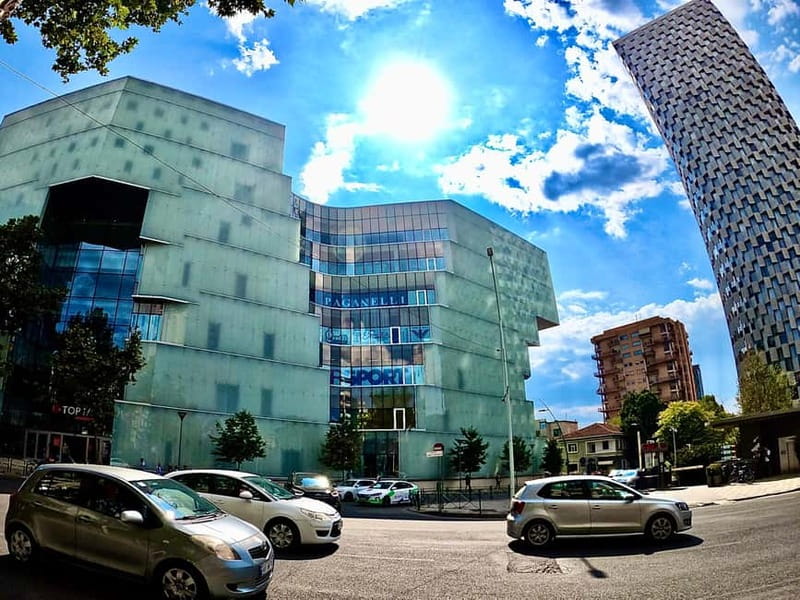
The final major area is Blloku, now known for cafes, restaurants, bars, and a polished evening atmosphere. Its earlier role was very different. During the communist period, it was associated with the political elite and Enver Hoxha’s villa.
That contrast is one of the most memorable parts of the tour. A neighborhood once closed to ordinary Albanians now represents Tirana’s social and commercial energy. The change tells you plenty about the end of isolation and the arrival of a new urban culture.
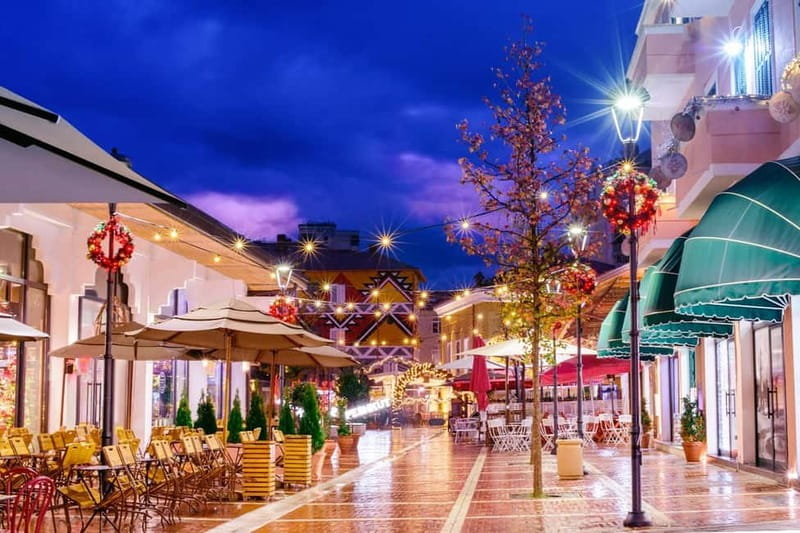
The tour ends with time in a fashionable Blloku cafe for a coffee or cocktail. Drinks are not included, but the pause is valuable. You can ask about local food, restaurant choices, social customs, transport, or places to visit next.
Past guides have also helped with practical choices such as restaurant suggestions, souvenir shopping, and finding a taxi. That kind of help can be more useful than another generic landmark, especially if Tirana is your first stop in Albania.
The guides and the style of explanation
The provider uses Albanian, English, and Italian-speaking guides. Names that appear repeatedly in the guide team include Gloria, Ilir, Thomas, and Iris, with Aron and others also leading tours.
The strongest pattern is personal explanation. Thomas has shared memories connected with Tirana’s changes and has used old photographs to show how the city looked in earlier periods. Iris is noted for clear discussion of history and politics. Gloria is described as friendly, flexible, and strong on history, culture, customs, and everyday behavior. Ilir is praised for fluent English, a comfortable pace, and detailed answers.
You should still take an active role. One group found that information was harder to hear when the guide spoke while walking. Ask the guide to stop before explaining an important point. The guides have shown they can adjust when visitors request a slower, more structured rhythm.
The tour may run even with one participant. That can make the experience feel more like a private conversation, though you should not assume a private group unless you book that option. A private group is available for those who want more control over the pace and questions.
Is $17 good value for three hours?
At $17 per person, this is a strong-value introduction to Tirana. You are paying for a qualified guide, a broad central route, and local explanations that would be difficult to assemble quickly on your own.
The price does not include meals, drinks, personal purchases, hotel transfers, or optional activity costs. There is no hotel pick-up or drop-off, so you need to reach the meeting point yourself. The meeting location can vary by booking option, with the Tirana International Hotel used as the principal reference point.
The best value comes if you use the tour as a foundation. Write down restaurant suggestions, museum names, and places you want to revisit. Then return to the National History Museum, House of Leaves Museum, Bunk’Art 2, or any religious site that deserves more time.
What to bring and who should book
Wear comfortable shoes. The itinerary covers a lot of central Tirana on foot, with stops for sightseeing, photographs, short visits, and a break.
I would recommend this tour to first-time visitors, history-minded travelers, people interested in post-communist change, and anyone who wants local advice before choosing restaurants and museums. It also suits solo visitors, since the tour can operate with one person.
It may be less suitable if you want a slow museum tour or a short, easy stroll with little historical explanation. The route is full, and the subject matter moves quickly from Ottoman Tirana to modern construction. You will get more from it if you ask questions and request stops for longer explanations.
You can cancel up to 24 hours before the start for a full refund, and reserve now while paying later. Children must be accompanied by an adult, and unaccompanied minors are not allowed.
Should you book the Tirana Walking Tour?
Yes, if you want a broad and thoughtful first look at Tirana for $17. The best reasons are the mix of major sights, difficult history, personal stories, and useful local advice.
Book it early in your stay if possible. You will understand Skanderbeg Square, Blloku, the Pyramid, and the central neighborhoods better afterward, and you can use the guide’s suggestions to plan the rest of your time.
If your priority is detailed museum access, treat this as a starting point and return independently. For most people who want context, orientation, and a friendly conversation over coffee, this three-hour walk is money well spent.
FAQ
How long does the Tirana Walking Tour last?
The tour lasts three hours.
How much does the tour cost?
The listed price is $17 per person.
Where does the tour start?
The main meeting reference is the Tirana International Hotel in Tirana. The exact meeting point may vary according to the option booked.
Where does the tour finish?
The tour finishes at the Tirana International Hotel.
Which languages are available?
Guiding is available in Albanian, English, and Italian.
Is the tour private?
A private group option is available. The regular group arrangement depends on the option you book.
Is the tour wheelchair accessible?
Yes, the activity is listed as wheelchair accessible.
Are food and drinks included?
No. Meals, drinks, and personal expenses are not included. The itinerary includes time for a coffee or cocktail in Blloku, but you pay for it yourself.
Are museum and optional activity tickets included?
Optional activity costs are not included. Check the booking conditions if you want to enter places such as Bunk’Art 2 or other museums.
Can children join the tour?
Children can join if accompanied by an adult. Unaccompanied minors are not allowed.
Just added around the world
- 3 Hour Rainforest Walk & Totem Park Wild Wolf Tours★ 5.0 · 265 reviews
- 2 Hour Alaska Rainforest Walk and Totem Park Small Group Tour★ 5.0 · 187 reviews
- Ketchikan Rainforest Canoe and Nature Walk★ 4.5 · 89 reviews
- Kelowna: #1 Rated Walking Food Tour with 7 Tastings and 4 Drinks★ 5.0 · 460 reviews
- Walking Food Tour Exploring Hanalei★ 5.0 · 282 reviews
- A Walk Through Time in Kennebunkport – Celebrating 200+ Years!★ 5.0 · 111 reviews
- Kampala’s Best Experience walking tour★ 5.0 · 137 reviews
- 3-Hour Rainforest, Beach & Wildlife Walk★ 5.0 · 73 reviews
Walking Tours, compared.

Magical London: Harry Potter Guided Walking Tour
Read our review →
Reykjavik Food Walk – Local Foodie Adventure in Iceland
Read our review →
History and Hauntings of Salem Guided Walking Tour
Read our review →
New Orleans Premier Ghost, Voodoo and Vampire Walking Tour
Read our review →
Amsterdam Anne Frank: Small-Group Walking Tour & Local Guide
Read our review →

Edinburgh Castle: Guided Walking Tour with Entry Ticket
Read our review →