REVIEW · WALKING TOURS
Sarajevo: Grand Walking Tour Through Time and Cultures
Sarajevo’s story is written in a surprisingly small area. In three hours, you can walk from the Latin Bridge, tied to the event that helped trigger World War I, through Ottoman lanes and craft shops, then into grand Austro-Hungarian streets and a city shaped by several faiths. I especially like the clear historical route and the chance to hear local stories from guides such as Elma, Kenan, Bojan, and Masha. It is a strong first look at Sarajevo for $21, though the pace and subject matter may feel demanding if you need frequent rests.
I also like that the tour does more than point at famous buildings. You hear about coffee, baklava, metalwork, market life, religious coexistence, and the city’s difficult recent past. The main consideration is that this is a three-hour walk with many stops, and the information comes quickly. Wear good shoes, and confirm the accessibility arrangements if you have mobility concerns.
Key points at a glance
- One walk covers several centuries: Ottoman, Austro-Hungarian, Yugoslav, and modern Sarajevo all appear along the route.
- Latin Bridge gives World War I context: You stand near the spot associated with the assassination of Archduke Franz Ferdinand.
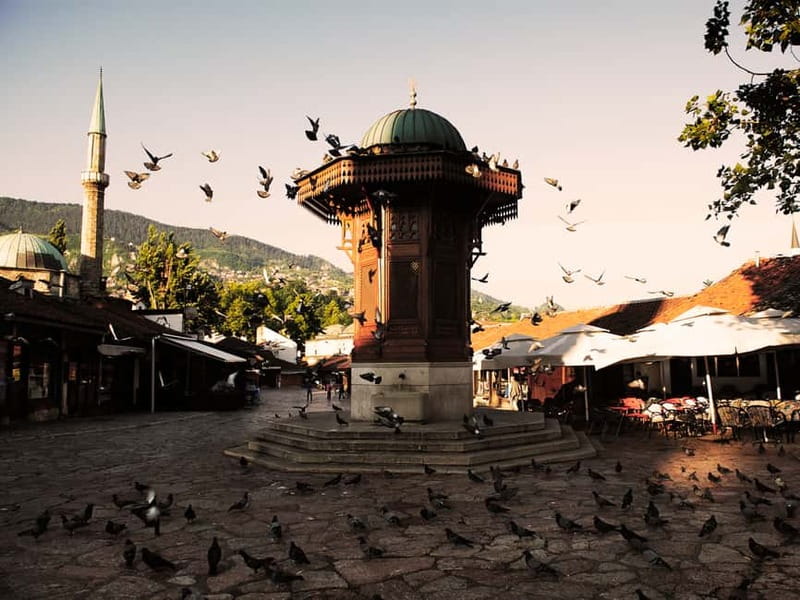
- Baščaršija is more than a photo stop: You see traditional craft streets, food shops, an old inn, and the Sebilj Fountain.
- Religious diversity is visible on foot: Mosques, an Orthodox cathedral, a Catholic cathedral, and the Jewish Museum appear in one compact city center.
- Guides add personal detail: Elma, Kenan, Bojan, Masha, and other local guides are praised for clear explanations, humor, and practical advice.
- The $21 price is easy to justify: A licensed guide, a city map, and three hours of central sightseeing make this good value for a first visit.
Sarajevo’s story begins where East meets West
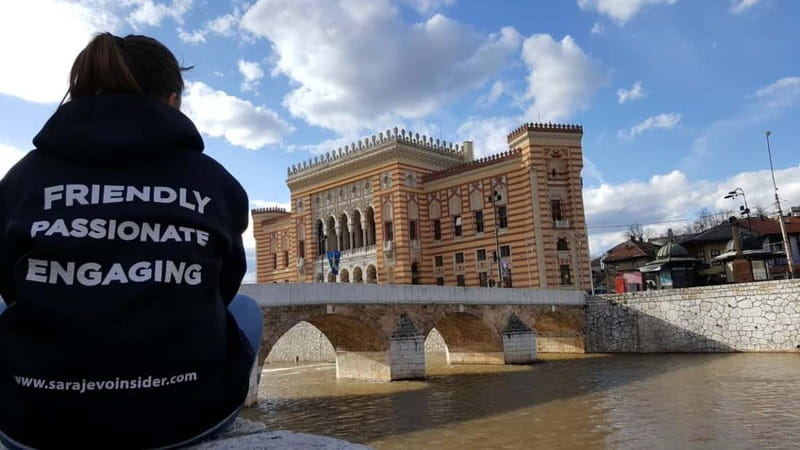
I like this tour because it gives you a useful mental map before Sarajevo starts to blur into a string of unfamiliar names. The route moves between the Miljacka River, the old Ottoman quarter, grand Austro-Hungarian buildings, and religious landmarks. You are not just collecting photographs. You are learning why the city looks and feels so different from one block to the next.
The central idea is Sarajevo as a meeting place of cultures. Ottoman rule shaped the market streets, mosques, fountains, and inns. Austro-Hungarian rule brought wider streets, formal public buildings, and European architectural styles. Later political periods left their own marks. Your guide connects these layers instead of treating each building as an isolated sight.
That approach matters in Sarajevo. The city’s past includes cultural exchange, religious coexistence, political conflict, and the scars of the 1992 to 1995 war. A good guide needs to explain painful subjects without turning the walk into a lecture. Guides including Kenan, Bojan, Elma, and Masha have been praised for balancing serious facts with warmth, humor, and room for questions.
A few more walking tours around the world worth a look
- Magical London: Harry Potter Guided Walking Tour
★ 4.7 · 22,044 reviews - Reykjavik Food Walk – Local Foodie Adventure in Iceland
★ 5.0 · 18,952 reviews - History and Hauntings of Salem Guided Walking Tour
★ 5.0 · 14,564 reviews
Latin Bridge and the road to World War I
The tour commonly reaches the Latin Bridge early. This is one of Sarajevo’s most important historical locations, linked with the assassination of Archduke Franz Ferdinand and his wife, Sophie, in 1914. That event helped set off the chain of decisions that led to World War I.
The value here is not the bridge alone. Your guide explains how a local political killing became part of a much larger European crisis. If you arrive mainly because of the World War I connection, this tour gives you that context while also showing you the rest of Sarajevo. You can understand the famous event as one moment in a much longer city story.
The stop is listed as a photo stop and guided walk, so do not expect a long museum visit here. It is an outdoor explanation in an active central area. Listen closely, ask questions, and take your photograph without expecting the site itself to tell the whole story.
Emperor’s Mosque and Sarajevo’s religious map
From the Latin Bridge, the route continues to the Emperor’s Mosque. This introduces the Ottoman character of Sarajevo and helps explain why Islamic architecture is such a strong part of the city center.
The tour then brings together several religious buildings and communities. You may see the Gazi Husrev-beg Mosque, Sacred Heart Cathedral, the Cathedral Church of the Nativity of the Theotokos, and the Museum of the Jews of Bosnia and Herzegovina. The point is not simply to count places of worship. It is to see how different traditions occupy the same urban space.
The Sarajevo Meeting of Cultures marker makes this idea especially easy to grasp. It marks the point where the visual character of the Ottoman quarter changes into the more Central European style associated with the Austro-Hungarian period. You can cross a short distance and feel the city change around you.
This part of the walk is one of its strongest features. You get a practical explanation of Sarajevo’s multicultural identity rather than a vague slogan. Your guide can also add details about religious customs, local life, and the ways communities shaped the city.
Sarajevo Brewery, City Hall, and the House of Spite
The Sarajevo Brewery appears as a brief guided stop. Its location and history help connect the Ottoman and Austro-Hungarian sections of the city with later urban development. The stop is short, about five minutes, so treat it as part of the wider story rather than a brewery tour.
The major architectural moment comes at Sarajevo City Hall, known as Vijećnica. Its neo-Moorish design reflects the Austro-Hungarian period’s interest in creating grand public buildings with an eastern visual language. You have time for a visit and guided explanation, making this one of the more substantial stops.
Across from City Hall, the House of Spite adds a memorable local story. Its name comes from the tale of a resident who refused to move when the authorities wanted to construct City Hall. The building is passed by rather than explored at length, but the story gives the grand building a human counterpoint.
I enjoy this contrast. City Hall represents official power and ambition. The House of Spite represents stubbornness, pride, and an individual voice. A short walk between the two makes the history easier to remember.
Same streets, a different route:
- New Orleans Premier Ghost, Voodoo and Vampire Walking Tour
★ 4.5 · 12,856 reviews - Amsterdam Anne Frank: Small-Group Walking Tour & Local Guide
★ 4.8 · 12,789 reviews - Edinburgh: Harry Potter Magical Guided Walking Tour
★ 4.8 · 11,944 reviews - Edinburgh Castle: Guided Walking Tour with Entry Ticket
★ 4.7 · 11,699 reviews
A viewpoint above the central streets
The viewpoint stop lasts about 15 minutes and gives you a chance to pause from the close detail of the old center. You can look back over Sarajevo and better understand its setting and compact layout.
The exact conditions of the view will depend on weather and the selected route, but this is a useful visual break. After hearing about empires, communities, and political events at street level, you can see how the central neighborhoods fit together.
This stop also explains why comfortable clothing matters. The tour is on foot, and the route includes a viewpoint as well as multiple streets, squares, and market lanes. The walk is not presented as a strenuous hike, but you should not treat it as a stationary city lecture.
Baščaršija, Sebilj, and the craft streets
Baščaršija is the heart of Sarajevo’s Ottoman-era center. Here, the tour shifts from major political events to daily life, traditional trades, food, and street-level culture.
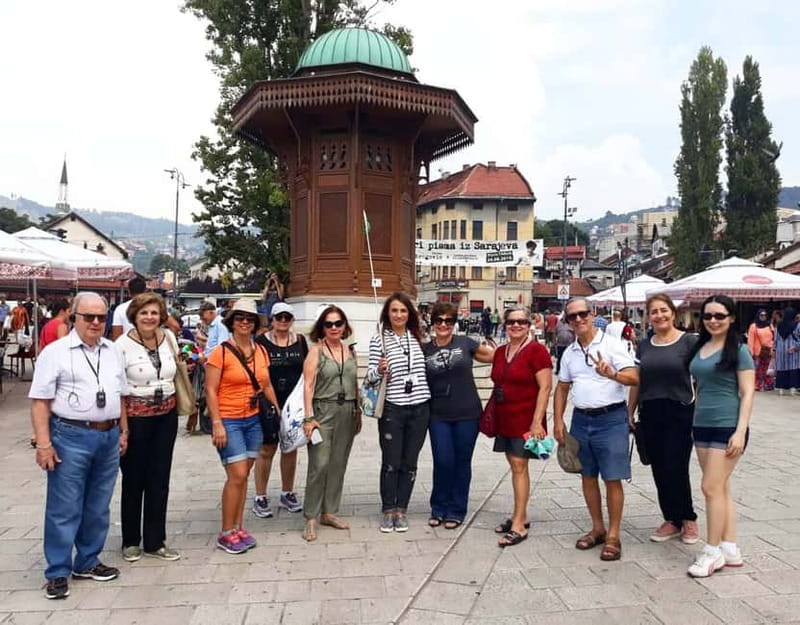
Sebilj Fountain is the quarter’s best-known landmark. Its wooden form is immediately recognizable and makes an easy meeting point for the old market area. Your guide explains the stories and legends connected with it, while giving you time for photographs.
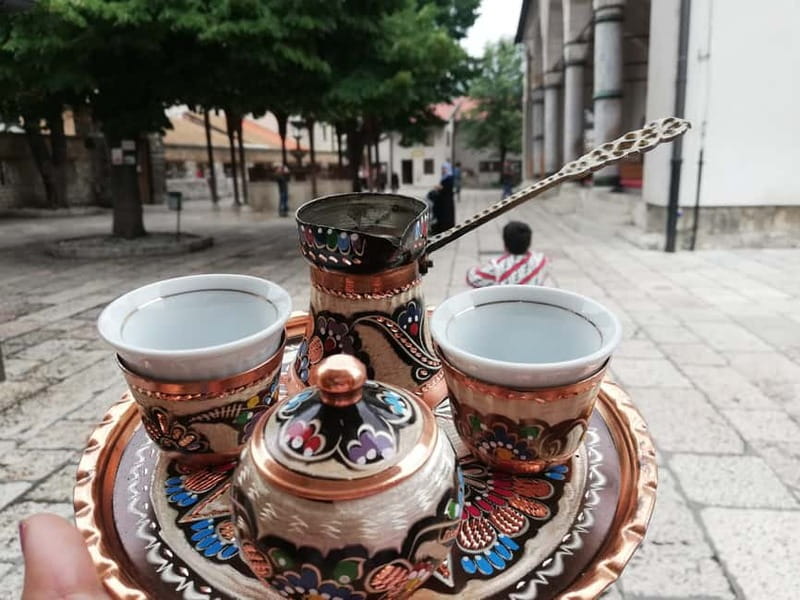
The streets of Bravadžiluk and Kazandžiluk show two sides of old market culture. Bravadžiluk is associated with food and traditional eating places. Kazandžiluk is known for copper and metalwork. Even if you buy nothing, the shops and displays help you understand how craft traditions remain part of Sarajevo’s public life.
This is also where practical advice becomes useful. Guides often point out Bosnian food, coffee, and places worth returning to after the tour. You may hear recommendations for local dishes and sweets, but food and drinks are not included in the $21 price.
Expect active streets and uneven surfaces in the market quarter. You will have more freedom to look around, but you should stay with the group and keep an eye on the guide in crowded areas.
Morića Han, baklava, and the taste of old Sarajevo
Morića Han is one of the most atmospheric stops on the route. This old inn recalls the period when merchants and other visitors needed a place to stay in the Ottoman city. The building helps you picture Sarajevo as a trading center where people, goods, and ideas moved through the Balkans.
The baklava shop adds a lighter and more sensory moment. You can learn about a familiar Bosnian sweet and get a practical suggestion for a treat to try later. This is a photo and visit stop, not a meal included in the booking, so bring some local currency or a card if you want to purchase something.
I like this section because it keeps the tour grounded. Sarajevo is not only a place where European history changed direction. It is also a city of coffee, pastry, shops, conversation, and skilled hands at work.
Gazi Husrev-beg Mosque and the city’s Ottoman center
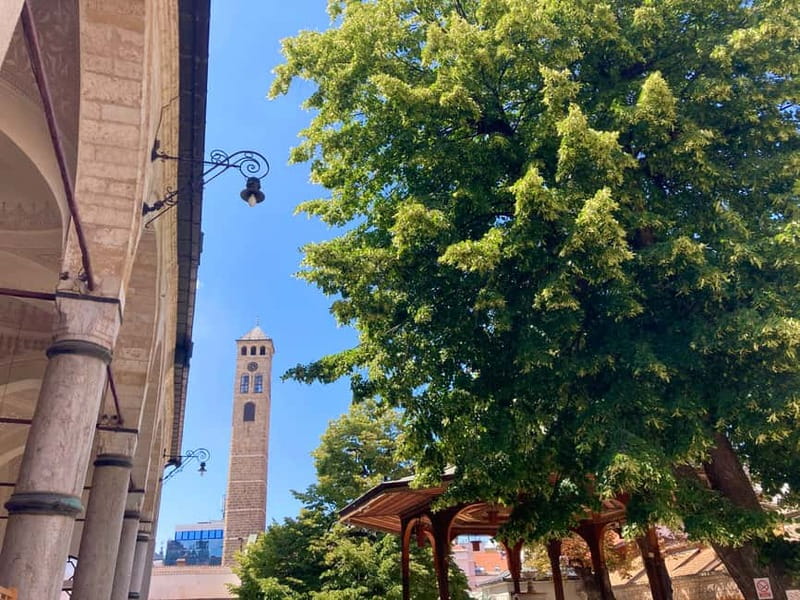
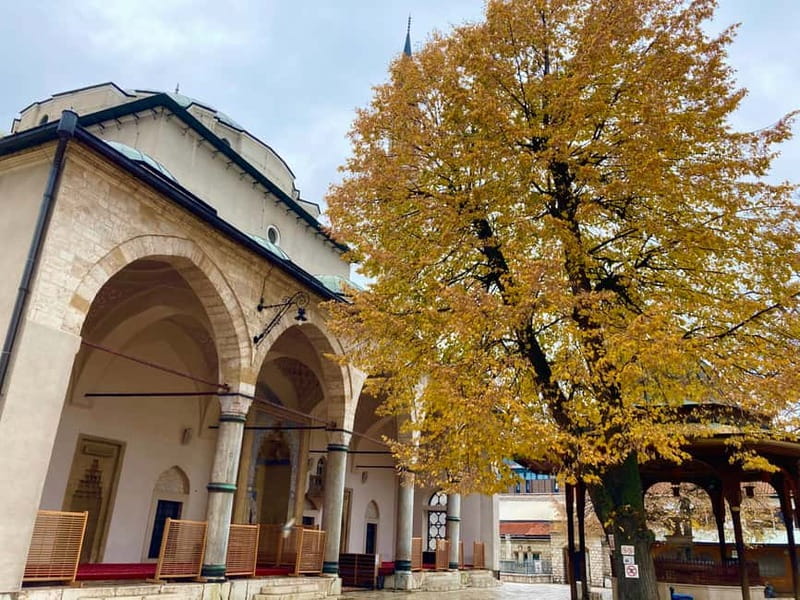
The Gazi Husrev-beg Mosque is one of the key Ottoman landmarks in Sarajevo. Its presence helps you understand the scale and importance of the old quarter, while the surrounding streets show how religious, commercial, and residential life once worked together.
Your guide should explain the mosque’s place in Sarajevo without reducing the neighborhood to architecture alone. The broader story includes education, charitable institutions, market life, and the public role of religious buildings.
Dress comfortably and respectfully for the walking route. The supplied information does not promise interior access at every religious site, so treat each stop as a guided visit or exterior explanation unless your guide tells you otherwise.
Jewish, Catholic, and Orthodox Sarajevo
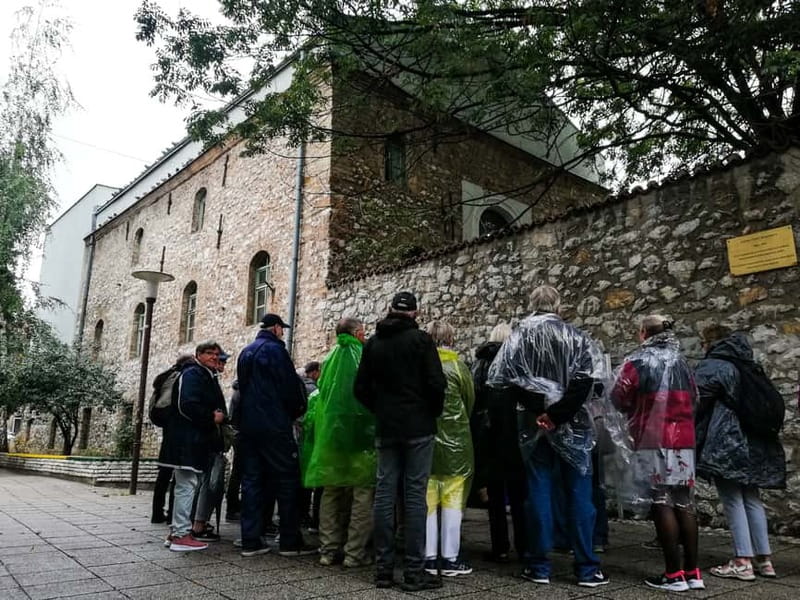
The Museum of the Jews of Bosnia and Herzegovina, Sacred Heart Cathedral, and the Cathedral Church of the Nativity of the Theotokos give this walk its strongest lesson in religious variety.
The Jewish Museum adds another important strand to Sarajevo’s story. The Catholic cathedral and Orthodox cathedral show how different Christian communities also shaped the city. Seeing these sites in one walk makes the city’s cultural mixture concrete.
This does not mean the city’s past was free of tension. The tour deals with difficult periods and the effects of war, including the way the 1990s siege still affects Sarajevo’s identity. Guides such as Bojan have been praised for explaining the scars of that period while also showing a city that looks toward the future.
You should expect some serious conversation here. The tour is not designed to avoid hard subjects, but it aims to place them in a wider story of survival, memory, and daily life.
City Market Hall and the Eternal Flame
The City Market Hall provides another look at Sarajevo’s everyday rhythm. The visit lasts about five minutes, so this is a concise stop rather than a full market visit. It gives you a glimpse of the city’s food and shopping culture before the tour moves toward its final landmark.
The walk ends at the Eternal Flame, one of Sarajevo’s best-known public monuments. It commemorates the liberation of the city in World War II and has become a familiar meeting point in the center.
Ending here works well. You move from the old Ottoman market to the Austro-Hungarian center, then through Sarajevo’s religious and political history, before finishing at a modern civic symbol. The route gives you a timeline you can follow on your own afterward.
What three hours and $21 really buy you
At $21 per person, this is a strong value if you want a guided orientation to central Sarajevo. The price includes a licensed guide and a city map, but not food, drinks, museum admission, or purchases at the market shops.
The value comes from the range of ground covered. A self-guided walk could take you past many of the same buildings, but it would be harder to connect the Latin Bridge, City Hall, Baščaršija, the religious sites, and the market streets into one clear story.
The three-hour length is also practical. You get enough time to understand the city without giving up an entire day. Several guides have been praised for keeping a relaxed pace, answering questions, and finishing on time. Private or small-group options are available, which can make the experience more personal.
The tradeoff is density. You visit many places, but most stops are short. If you want extended time inside museums or detailed architectural study, you will need separate visits afterward.
Guides, languages, and group feel
The tour is led by a licensed local guide, with service available in English, German, French, Italian, Spanish, Croatian, or Serbian. Specific guides praised for their storytelling and local insight include Elma, Kenan, Bojan, Masha, Tarek, Hamza, Emina, Suad, and Muhamed.
Guide quality matters especially in Sarajevo because the subject matter is layered and sometimes painful. The strongest style reported across the experience is clear explanation, patient answers, humor, and personal connection. Some guides add family experiences when discussing the 1990s war, while others focus more closely on documented events and the city’s older periods.
Groups may be private or small. A small group gives you a better chance to ask questions and hear the guide clearly. If you are alone and no one else books your departure, you might receive a private walk, though that depends on the booking.
Who should book this Sarajevo walk?
I would choose this tour if you are visiting Sarajevo for the first time, have only a short stay, or want a historical framework before exploring alone. It suits people interested in architecture, World War I, Ottoman cities, religious history, local food, and the effects of the 1990s conflict.
It also works well for solo visitors. The route gives you orientation, practical food suggestions, and a chance to ask questions without arranging several separate visits.
I would be more cautious if you dislike walking for three hours, need frequent seated breaks, or prefer spending a long time inside each attraction. The activity information calls the tour wheelchair accessible but also says it is not suitable for people with mobility impairments. That is a genuine inconsistency, so contact the provider before booking if access is important to you.
Practical advice before you go
Wear comfortable shoes and light, comfortable clothes. Sarajevo’s central streets include market lanes, paved areas, and stops where you may stand while listening.
Bring water, especially in warm weather, and allow room in your day for food afterward. Food and drinks are not included, though the route passes baklava shops, food streets, and places your guide may recommend.
Take notes or mark places on the city map. The tour gives you many ideas for later, including the market quarter, religious buildings, City Hall, and local cafés. If you want to return inside a building or spend longer at a museum, use the walk to decide where to go next.
Cancellation is free up to 24 hours before the start, and you can reserve now and pay later. Starting times depend on availability, so check the date carefully when booking.
Should you book it?
Yes, if you want a well-priced first introduction to Sarajevo. The route covers the city’s major historic layers, the guides bring local context, and the price is modest for three hours with a licensed professional and map.
Choose it especially if you want more than a list of monuments. The best part is the connection between market life, religious coexistence, imperial architecture, World War I, and modern Sarajevo. Skip it only if you need a very slow pace, long indoor visits, or a tour focused on one period alone.
FAQ
How long does the Sarajevo walking tour last?
The tour lasts three hours.
How much does the tour cost?
The listed price is $21 per person.
What languages are available?
The tour is available in German, French, Italian, Spanish, English, Croatian, and Serbian.
What landmarks are included?
The route includes the Latin Bridge, Emperor’s Mosque, Sarajevo Brewery, City Hall, House of Spite, a viewpoint, Baščaršija, Sebilj Fountain, Morića Han, Gazi Husrev-beg Mosque, the Sarajevo Meeting of Cultures, the Museum of the Jews of Bosnia and Herzegovina, Sacred Heart Cathedral, the Orthodox Cathedral, City Market Hall, and the Eternal Flame.
Is food included?
No. Food and drinks are not included, though the route includes food-related areas such as Bravadžiluk and a baklava shop.
Is a guide included?
Yes. A licensed tour guide is included.
Is a city map included?
Yes. A city map is included.
Can I book a private or small-group tour?
Yes. Private and small-group options are available.
What should I bring?
Bring comfortable shoes and comfortable clothes. If you have mobility concerns, confirm the route and access arrangements before booking.
Just added around the world
- Fira: Guided Foodie Walking Tour with Tastings★ 4.9 · 474 reviews
- Fez: Guided Walking Tour of the Historic Medina★ 5.0 · 359 reviews
- Fez: Walking Tour in the Ancient City of Fez★ 4.8 · 73 reviews
- Faro: Old Town Guided Walking Food Tour★ 4.9 · 94 reviews
- Feel like a local – Walking Tour in Mykonos Town 2hours★ 4.4 · 77 reviews
- Fes: A Guided Walking Tour Through the Historic Medina★ 4.4 · 97 reviews
- Fez: Half-Day City Private Walking Tour with a Guide★ 4.6 · 114 reviews
- Fanal / Assobiadores – Levada Walk★ 4.6 · 93 reviews
Walking Tours, compared.

Magical London: Harry Potter Guided Walking Tour
Read our review →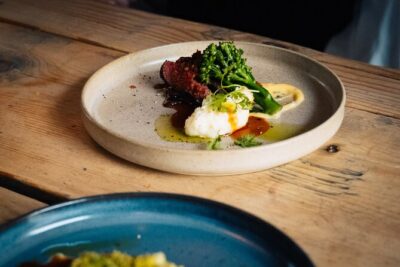
Reykjavik Food Walk – Local Foodie Adventure in Iceland
Read our review →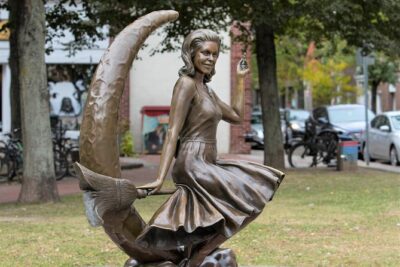
History and Hauntings of Salem Guided Walking Tour
Read our review →
New Orleans Premier Ghost, Voodoo and Vampire Walking Tour
Read our review →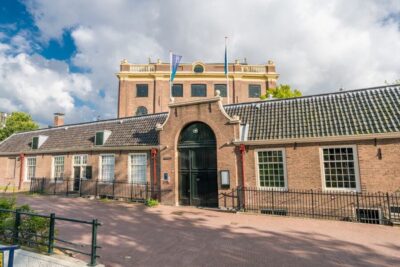
Amsterdam Anne Frank: Small-Group Walking Tour & Local Guide
Read our review →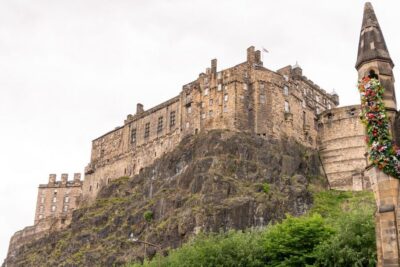
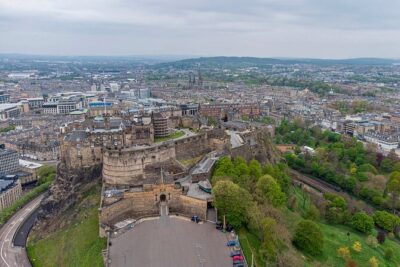
Edinburgh Castle: Guided Walking Tour with Entry Ticket
Read our review →