
REVIEW · PORTO
Porto: Port and Douro Wine Walking Tour with 9 Tastings
The best part of this tour is the comparison. In three Vila Nova de Gaia wine houses, you taste Port beside Douro table wines, then learn why the same region can produce such different drinks. I like the small-group feel and the guides, including Maria, Ricardo, Sara, and João, who are repeatedly praised for making the lessons friendly rather than stiff.
I also like the easy route along Gaia’s riverfront, with no need to find cellar entrances on your own. The main drawback is the amount of alcohol: nine advertised tastings, and sometimes ten depending on the session, can catch up with you. Eat first, drink water, and pace yourself.
Key points to know before you book
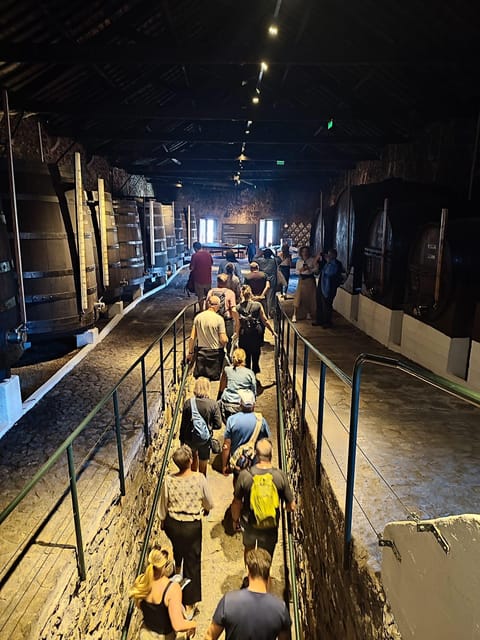
- Three wine houses in one compact Gaia route: Visit Vasques De Carvalho, Fonseca Port Wine Cellars, and Solar dos Dragos.
- Port and Douro wines side by side: Learn the difference between fortified Port styles and unfortified regional wines.
- Guides set the tone: Maria, Ricardo, Sara, João, and other local guides are praised for humor, patience, and clear explanations.
- Nine tastings are advertised: Past sessions have included ten samples, so confirm the current tasting lineup when booking.
- Good value at $57: Three hours, three venues, a guide, and multiple tastings make this a useful introduction to Gaia’s wine scene.
- Plan for stairs, weather, and alcohol: Wear comfortable shoes, bring no large bag, and do not book this if you have serious mobility limits.
Why Gaia is the right place to learn about Port
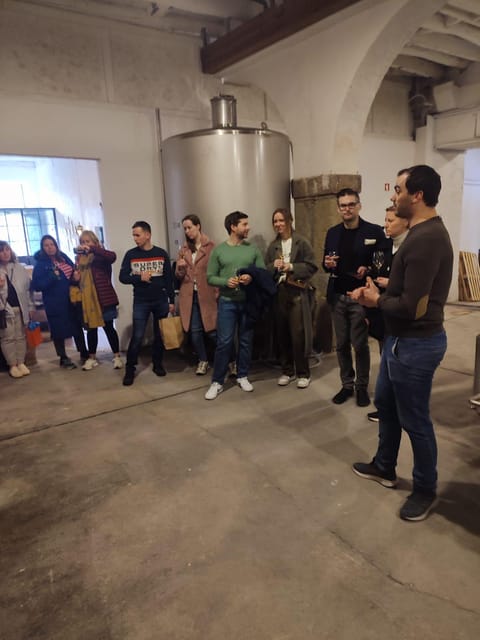
Cross the Douro River from Porto and you reach Vila Nova de Gaia, the district long linked with Port wine storage and sales. The tour begins outside the Posto de Turismo, or Loja Interativa de Turismo, on the main riverfront sidewalk.
That starting point matters. You are already close to the wine houses, so the tour spends its time tasting and learning instead of losing an hour on transport. The walk between stops is short, though Gaia is not completely flat and cellar buildings can involve uneven floors or steps.
I like this setup for a first afternoon in Porto. You get a practical introduction to the wine district before deciding which producers, bottles, or later visits deserve more of your time.
Your guide leads the group between the venues and explains the basic story of the Douro Valley, Portugal’s first demarcated wine region. You learn how the river valley, vineyards, production methods, and Gaia cellars fit together. The aim is not to turn you into a sommelier. It is to help you taste with more confidence.
More Wine and Tapas Walks in Porto:
- Porto: Wine Tasting with Tapas Walking Tour
★ 4.4 · 1,541 reviews - Porto: Delicious Food and Wine Walking Tour
★ 4.8 · 977 reviews - Barcelona Tapas and Wine Experience Small-Group Walking Tour
★ 5.0 · 5,804 reviews
Three hours, three cellars, several different personalities
The advertised route gives each wine house about an hour. That is enough time for a guided explanation and a serious set of samples, but it is not a slow, private tasting with endless pauses.
The three stops also give the afternoon some useful variety:
- Vasques De Carvalho
- Fonseca Port Wine Cellars
- Solar dos Dragos Porto and Douro Wines
The balance is part of the appeal. Fonseca gives you a major, well-known Port name, while Vasques De Carvalho and Solar dos Dragos bring a smaller-scale local feel. You are not simply visiting three versions of the same polished tasting room.
Past sessions have varied slightly in the number of samples. The experience is sold with nine tastings, while some people have received ten, including a roughly equal mix of Port and Douro wines. I would treat nine as the firm expectation and any extra pour as a bonus.
Stop one: Vasques De Carvalho and the Port basics
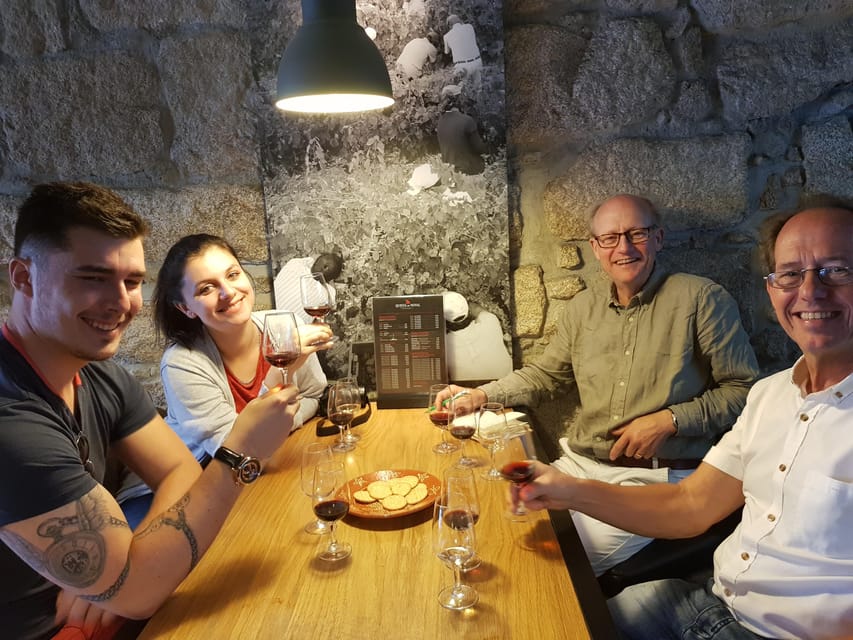
At Vasques De Carvalho, your guide begins to put structure around the tasting. You can expect an introduction to Port production, regional styles, and the main differences between the wines in your glass.
This is the point where the tour helps beginners most. Port can seem like one broad category until you compare different colors, sweetness levels, ages, and serving styles. A good guide will point out what to smell, what to notice on the palate, and how the wine changes as you taste it slowly.
Guides such as Maria and Ricardo have been praised for explaining technical points in plain language. That matters because wine lessons can quickly become a string of terms with no practical use. Here, you can ask why one Port feels heavier, why another tastes fruitier, or how a Douro wine differs from fortified Port.
The first stop is also where pacing becomes important. Port is fortified, so it can be stronger than the table wines you may be used to drinking with lunch. I suggest small sips at the beginning and leaving plenty of wine in the glass if you do not want to finish every sample.
Stop two: Fonseca adds a major Port house
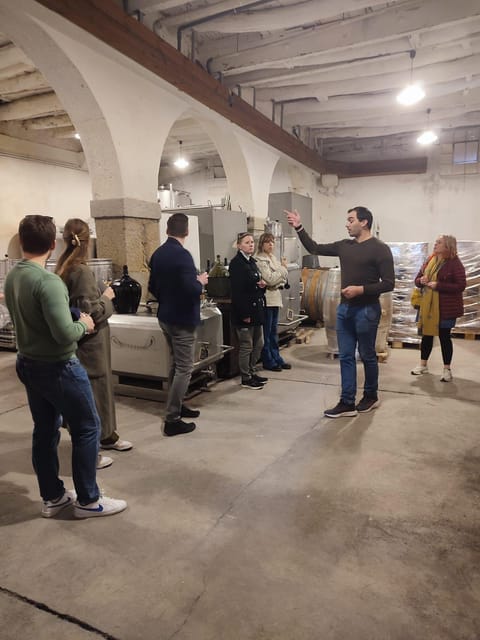
Fonseca Port Wine Cellars brings a different scale and feel. It is an internationally recognized Port house, and its presence gives the tour a chance to show how a larger historic producer presents the region.
Here, the cellar setting helps connect the drink with the business behind it. You are not only tasting a sweet fortified wine. You are learning about a long-established production and storage tradition tied to the Douro Valley and Gaia.
This stop can be particularly useful if you plan to buy Port later. You will have a better sense of how a famous house compares with smaller producers, and you can ask your guide what separates the styles. The tour is not designed as a shopping trip, but you may find bottles available for purchase, and one person arranged to have Port shipped home.
I would not book this expecting an extensive behind-the-scenes production visit at every stop. The supplied plan describes wine tastings and guided cellar visits, but the exact presentation can differ by venue. The value is in the combination of setting, explanation, and comparison rather than access to every part of a working winery.
A few more walking tours around Porto worth a look
- Porto Walking Tour, Lello Bookshop, River Cruise and Cable Car
★ 5.0 · 3,354 reviews - Experience Porto’s Charm: 3-Hour Guided Walking Tour
★ 5.0 · 2,432 reviews - Porto: 3-Hour Guided City Highlights Walking Tour
★ 4.8 · 2,050 reviews - Porto: Historic City Center Walking Tour
★ 4.7 · 1,172 reviews
Stop three: Solar dos Dragos and the broadest comparison
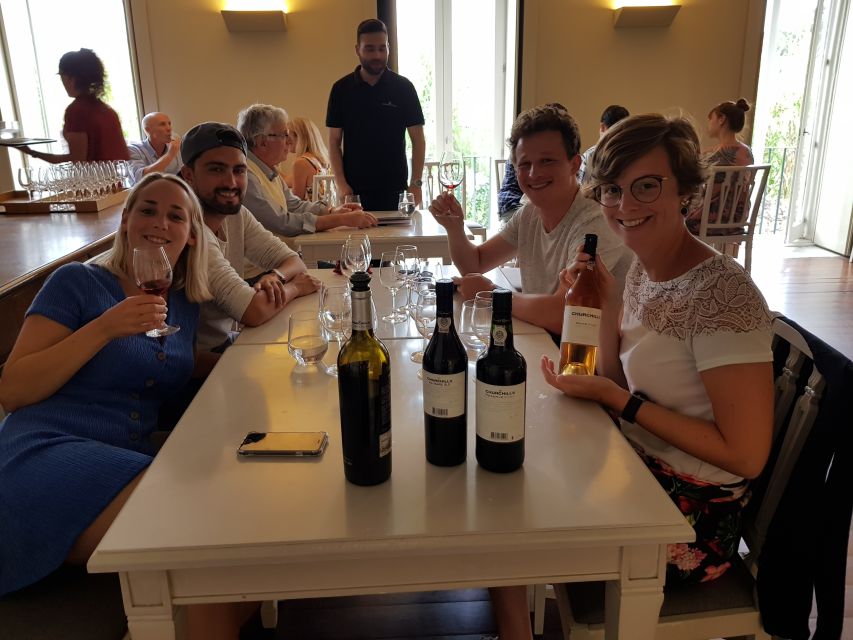
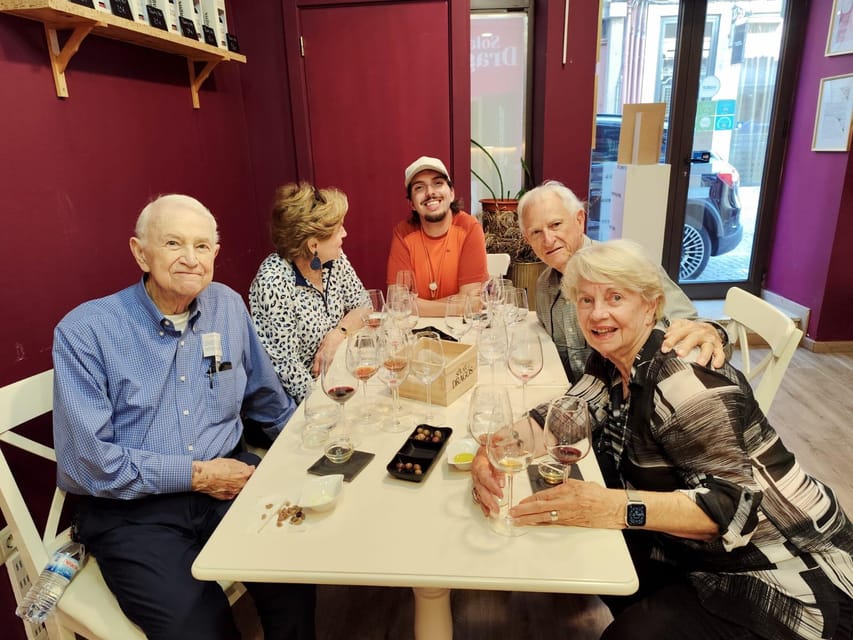
Solar dos Dragos Porto and Douro Wines is the final stop, and it helps widen the focus beyond Port. This is where Douro wines can get more attention, allowing you to compare unfortified reds or whites with the fortified samples from earlier in the afternoon.
Several sessions have included simple pairings such as bread, olive oil, and cheese at the last venue. These extras are not listed as a guaranteed inclusion, so I would not book on the promise of food. Still, they show why the final stop can be a pleasant place to slow down and connect wine with local eating habits.
A good final tasting also gives you a chance to decide what you actually like. You may discover that a dry Douro wine suits you better than a sweet Port, or you may find a style of Port you had never tried before. One useful feature of the lineup is its range. The samples are intended to be different rather than nine near-identical glasses.
Do not expect a full meal. Lunch and food are not included, and any pairing offered at the final house is an occasional addition rather than something to rely on. Eat beforehand.
What the guides add to the experience
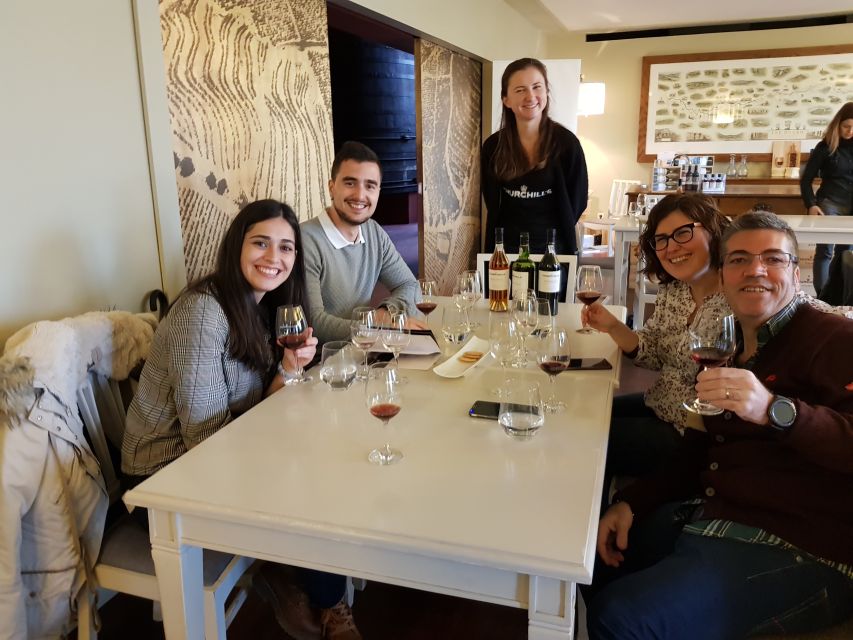
The guide is the main difference between a useful tasting and a row of unrelated pours. The strongest part of this experience is the human explanation between cellar visits.
Maria appears often in the feedback, with praise for her humor, energy, and ability to explain the region without losing the group. Ricardo is noted for being entertaining and clear on production. Sara is described as open and engaging, while João has been praised for fun facts and his work at the final tasting.
Guide assignments change, so you cannot select one of these people with certainty. The important point is that the operation uses local English- and Portuguese-speaking guides who can answer questions and keep the walk moving.
I especially like the social side. A small group gives you room to ask questions, and the walk creates natural pauses for conversation. It can work well for solo visitors, couples, and friends who want an activity that does not feel like a formal lecture.
The group itself affects the mood. If people are quiet, the guide may need to carry more of the conversation. If everyone joins in, the tasting becomes livelier. The format encourages interaction, but it cannot guarantee a talkative group.
Nine tastings require a sensible plan
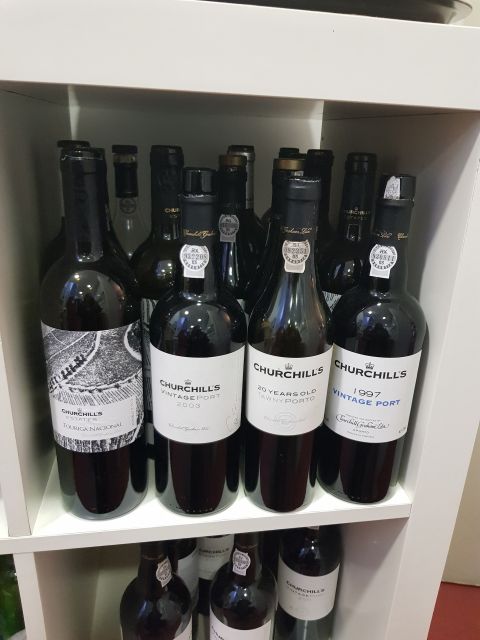
This is not a tasting where you should arrive on an empty stomach. A full meal is not included, and several participants specifically recommend eating beforehand. With nine samples, or possibly ten in some sessions, you can feel the alcohol well before the final glass.
Here is the sensible approach I would use:
- Eat a proper meal before meeting the guide.
- Drink water throughout the afternoon.
- Taste everything, but do not feel obliged to finish every pour.
- Avoid scheduling a demanding activity immediately afterward.
- Use the walk between cellars as a chance to get fresh air, not as proof that you are fine to keep drinking.
The experience is educational, but it is still an alcohol-focused outing. Children under 18 are not permitted. If you do not drink, or you want a tour centered mainly on architecture and history, this may not be the best use of your afternoon.
The walking route is short, but comfort still matters
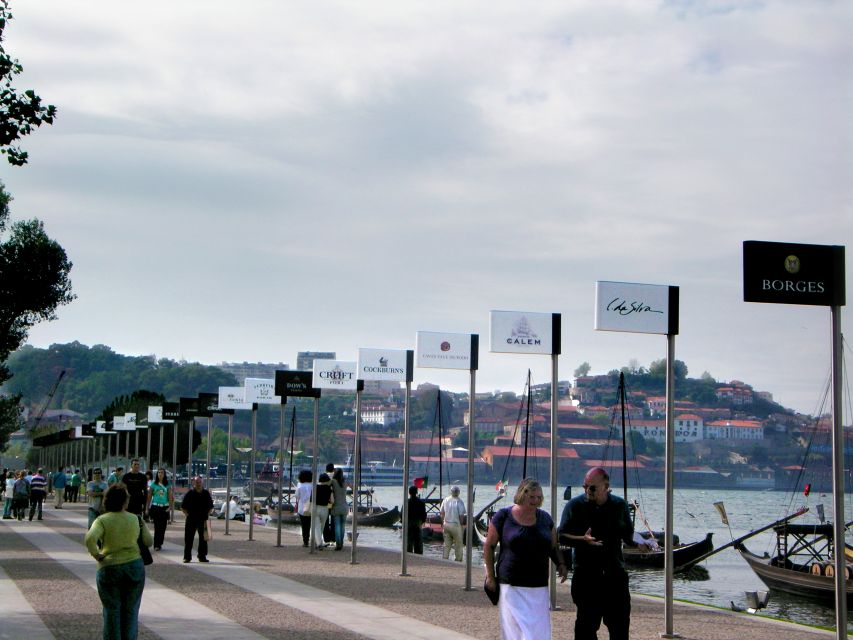
The tour describes only a small amount of walking, with the three venues close to one another along the Gaia riverfront. That makes it easier than a full-day vineyard excursion into the Douro Valley.
You should still wear comfortable shoes. The route takes place outdoors in all weather, and you will be moving between cellar buildings. Dress for the forecast and do not bring luggage or a large bag.
The tour is not suitable for people with mobility impairments. The short distance helps, but it does not remove the possibility of uneven streets, slopes, or steps inside old wine houses. Ask the operator about your needs before booking if walking or standing is difficult.
There is no hotel pickup. You meet at the tourism office by the river, then finish at one of two listed drop-off points: Avenida de Diogo Leite 256 or the tourism office. That keeps the tour simple, but you need to arrange your own way to and from Gaia.
Is $57 good value?
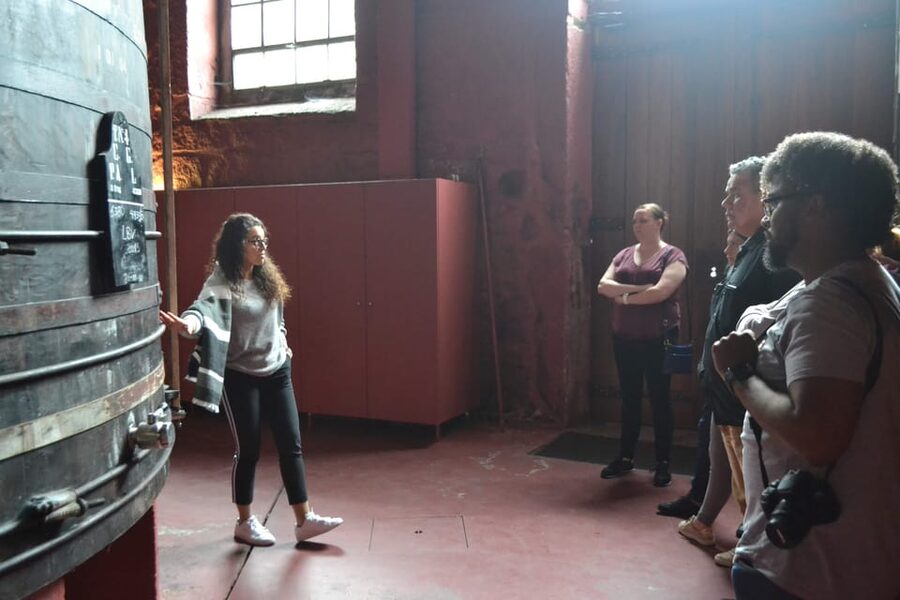
At $57 per person, the price is fair for a three-hour guided tasting with three venues and nine included samples. You are paying for more than the wine itself: the guide, the cellar access, the explanations, and the convenience of a planned route all matter.
The value is strongest if you are new to Port. Instead of paying for separate tastings and guessing which houses to visit, you get a structured comparison in one afternoon. You also avoid spending your first day in Porto trying to understand the difference between a Port lodge, a tasting room, and a Douro wine producer.
It is less compelling if you already know Port well and want a rare vintage, a private sommelier session, or a long visit at one producer. The route favors breadth over depth.
The small-group option helps justify the cost, especially if you want to ask questions. Private groups are also available, though the price and arrangements may differ. Check the exact booking terms for your date.
Who should book this tour?
I would recommend it to anyone who wants a clear introduction to Porto’s wine culture without committing to a full-day trip into the Douro Valley. It suits curious drinkers who enjoy learning a little, walking a little, and tasting several styles in one sitting.
It is also a strong choice for solo visitors. The small-group format makes it easy to meet people, and the guide helps keep the social side from feeling forced.
Couples and friends should book it if they want a relaxed afternoon rather than a grand formal wine event. The tone is friendly and sometimes humorous, especially when the guide encourages questions and explains wine in everyday terms.
I would skip it if you need a fully accessible route, dislike fortified or sweet wines, or prefer a meal-based food tour. I would also avoid booking it late in a trip if you already have several alcohol-heavy plans lined up.
Booking and timing advice
The tour lasts three hours, but allow extra time before and after for finding the meeting point and recovering from the tasting. Arrive 10 minutes early at the riverfront tourism office.
Starting times vary, so check availability for your date. Free cancellation is available up to 24 hours in advance for a full refund, and you can reserve now and pay later, which helps if your Porto schedule is still moving.
The tour runs in all weather. A rainy afternoon will not cancel the activity automatically, so bring suitable clothing and shoes. Keep your bag small, since large bags and luggage are not allowed.
My verdict: book it for a first taste of Gaia
I would book this tour early in a Porto stay, ideally after you have eaten and before you choose bottles to take home. The best features are the three-house comparison, the mix of Port and Douro wines, and the guides who make the subject approachable.
Just remember what you are buying. This is a compact, social tasting walk, not a full vineyard visit or a private wine course. Expect nine samples, prepare for the possibility of ten, and pace yourself.
If you want to understand why Gaia matters, learn the basic Port styles, and taste beyond a single famous label, $57 is a sensible price. If you want a quiet, highly specialized tasting or have mobility concerns, choose something more focused.
FAQ
Where does the tour meet?
Meet your guide outside the Posto de Turismo, also called the Loja Interativa de Turismo, on the main sidewalk along the riverfront in Vila Nova de Gaia.
How long does the tour last?
The walking tour lasts three hours, with time spent at three wine houses.
How many wines will I taste?
The activity includes nine Port and Douro wine tastings. Some past sessions have included ten samples, so confirm the current number and selection when booking.
Which wine houses are included?
The planned stops are Vasques De Carvalho, Fonseca Port Wine Cellars, and Solar dos Dragos Porto and Douro Wines.
What languages are available?
The tour is offered in English and Portuguese.
Is food included?
Lunch and food are not included. Some sessions may offer bread, olive oil, or cheese at the final stop, but you should eat before the tour and not rely on this.
Can children join the tour?
No. The activity is not suitable for children under 18.
Is the tour suitable for people with mobility impairments?
No. The tour involves walking between wine houses and is not suitable for people with mobility impairments. Comfortable shoes are recommended, and the tour operates in all weather.
Just added around Porto
- Essential Porto Walking Tour★ 4.6 · 129 reviews
- Porto: Private Guided Walking Tour★ 5.0 · 387 reviews
- 3-hour private guided walking tour of the BEST of Porto★ 5.0 · 290 reviews
- Porto: Jewish Heritage Walking Tour★ 4.7 · 266 reviews
- 3-Hour Porto Jewish Heritage Walking Tour with Local Guide★ 4.5 · 396 reviews
- Porto Walking Tour – The Perfect Introduction to the City★ 5.0 · 733 reviews
- Porto: Historical Center Walking Tour★ 4.8 · 898 reviews
- Porto: Guided Walking Tour and Lello Bookshop★ 4.8 · 895 reviews
Wine and Tapas Walking Tours, compared.
Barcelona Tapas and Wine Experience Small-Group Walking Tour
Read our review →
Madrid Tapas & Wine Tasting Walking Tour – Small Group Local Bars
Read our review →

Montmartre Hill French Gourmet Food and Wine Tasting Walking Tour
Read our review →

Madrid by Night Small Group Tour: Stories, Sights and Tapas Bites
Read our review →
Barcelona Tapas Walking Tour: Food, Wine & History
Read our review →Browse the lists this tour appears in