
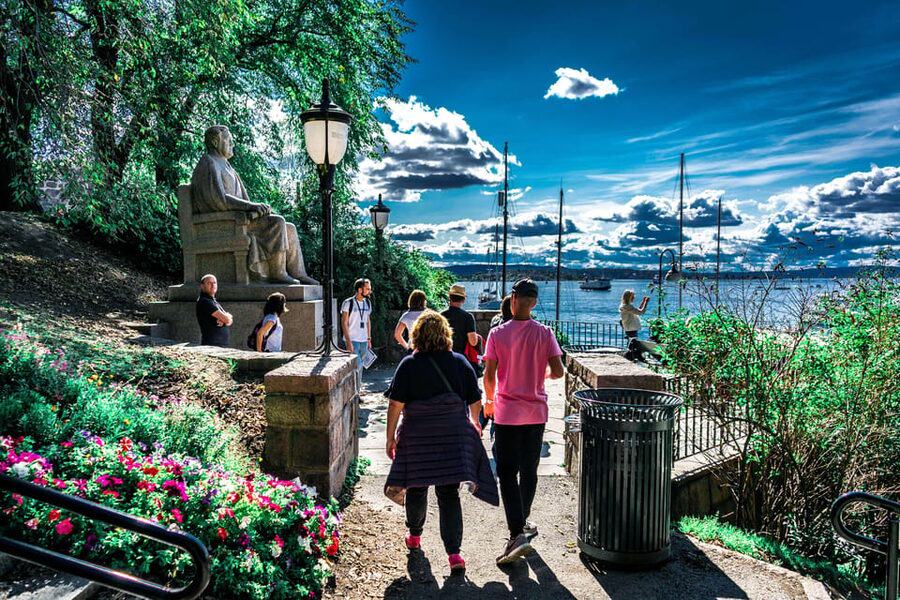
REVIEW · OSLO
Oslo: Private Walking Tour
Oslo’s story comes into focus on foot: a city moved after fire, rebuilt around a fortress, and now reshaped by daring modern buildings. This private walk links the harbor, royal center, Parliament, Akershus Fortress, and the sharply angled Opera House in two well-used hours.
I like the private format, which lets your guide adjust the pace and answer family questions instead of delivering a fixed speech. I also like the mix of old and new: Christiania Torv and the fortress sit comfortably beside City Hall, Aker Brygge, and an Opera House that looks ready to slide into the fjord.
The main drawback is price. At $461 per group up to one person, this is a costly way to cover ground on foot, especially if you are traveling alone. You are paying for personal attention, not admission tickets or a long list of included attractions.
Key points at a glance
- A harbor-to-city-center route: Begin at the Nobel Peace Center and finish near the Opera House, with Oslo’s waterfront framing the walk.
- A private guide in your language: Tours are offered in English, Spanish, French, German, Italian, and Norwegian.
- A strong first-day overview: You see City Hall, the National Theatre, Royal Palace, Karl Johans gate, Parliament, and Akershus Fortress.
- Old Oslo beside new Oslo: Christiania Torv and the Bank Square contrast with the modern waterfront and Opera House.
- A useful two-hour length: The route gives you a clear sense of central Oslo without taking an entire morning or afternoon.
- A price worth weighing carefully: The tour makes most sense when personal guiding and flexible conversation matter more than low cost.
What this Oslo walk is really designed to do
This is an orientation tour, not an entry ticket tour. You will look at major buildings from outside, hear the city’s story, and move between the main sights with a local guide. The compact route works well if Oslo is your first stop in Norway or if you have only an afternoon before a train, cruise, or other plans.
The walk begins at the Nobel Peace Center, outside the entrance at Brynjulf Bulls plass 1. Your guide is expected to arrive about 10 minutes early and will hold a sign with the local partner’s name. That makes the meeting point fairly clear, though I would still arrive a few minutes ahead since city-center waterfront areas can be busy with pedestrians and traffic.
Guides may include Amanda, Anya, Inger, or Tine, depending on the date and language selected. The strongest pattern in the feedback is personal attention. Amanda is noted for giving clear answers and explaining Oslo and daily life in good measure. Anya is described as warm and friendly, while Inger adapted well to a group with four children. Tine’s tour included less obvious stops, including the library known for future-focused design.
You should not expect one specific guide by name unless the operator confirms it. The important point is that the experience is built around a live person rather than an audio device or a large group.
More Private Walking Tours in Norway:
- Oslo: Private Walking Tour with a Local
★ 4.5 · 263 reviews - Bergen: Private Walking Tour with a Local
★ 4.6 · 263 reviews - Stavanger: Private Walking Tour with a Local
★ 4.5 · 100 reviews
Starting beside the Nobel Peace Center and Aker Brygge
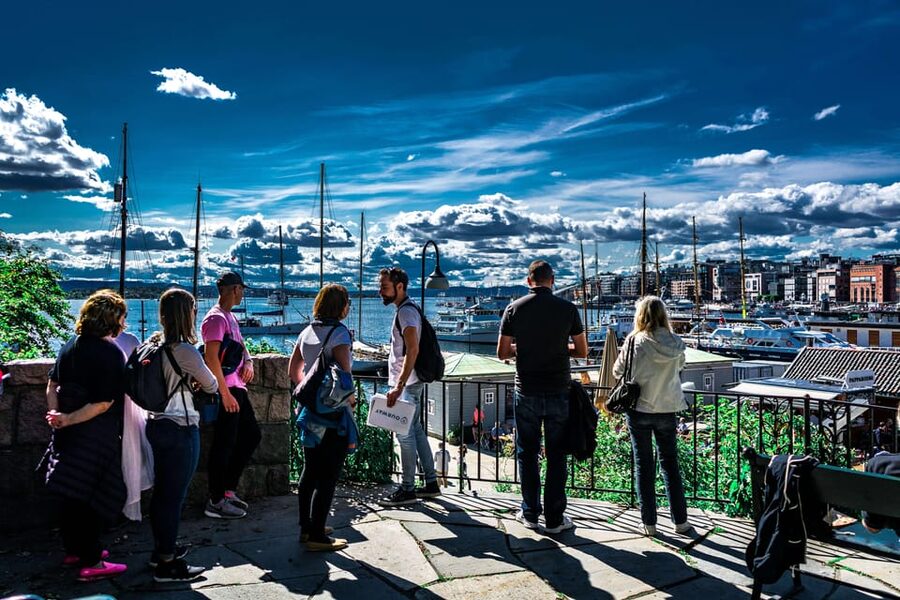
The opening at the Nobel Peace Center gives the tour a useful setting. You are beside Aker Brygge, a waterfront district with views across Oslo Harbour toward the fjord. It is a good place to begin because you can immediately connect Oslo’s public life with its water.
The Nobel Peace Center itself is one of the city’s best-known cultural buildings, but this walk treats it as a meeting point and exterior sight rather than a museum visit. Do not plan on going inside as part of the tour. If the center interests you, save it for another time and check its opening information separately.
From here, your guide introduces Oslo’s wider story. The city is linked to Viking-era settlement, but the more useful turning point for this walk comes after the great fire and the decision by King Christian IV to rebuild elsewhere. The city was moved and reshaped, creating the foundation for the central Oslo you see now.
That story gives the route a clear thread. Oslo is not simply a collection of grand buildings. It is a city repeatedly adjusted by fire, royal planning, defensive needs, trade, and modern waterfront development.
City Hall and the Nobel Peace Prize setting
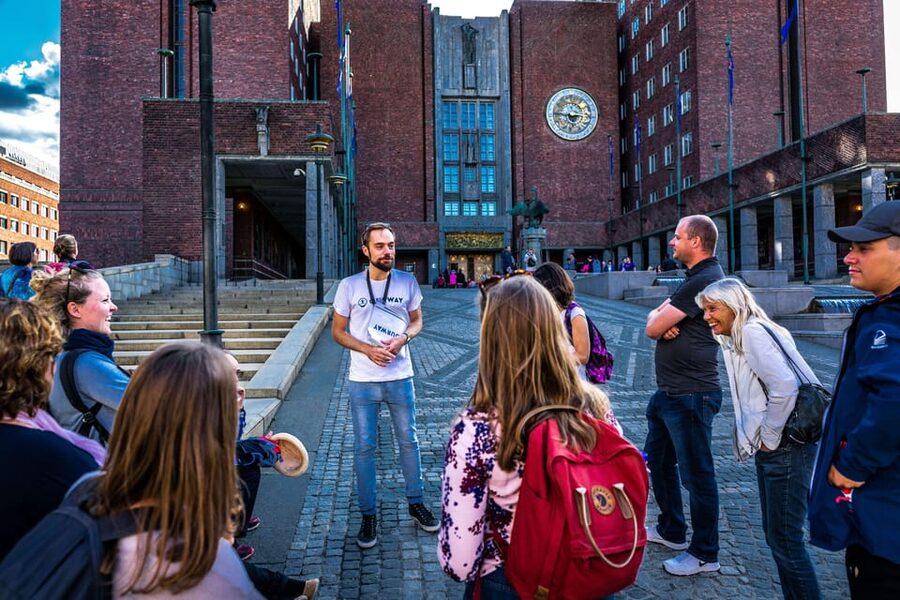
Oslo City Hall is one of the first major buildings on the route. Its broad brick exterior and civic scale make it easy to spot, and its importance goes beyond appearance. The Nobel Peace Prize ceremony takes place here, giving the building a direct connection to one of Norway’s best-known international traditions.
Your guide can help you read City Hall as a working civic building rather than just a photo stop. You will learn why it matters and how it fits into Oslo’s public center. Since the tour is outdoors, you will see the building from the outside and should not expect a ceremony-room visit.
This is also a point where traffic noise can affect the experience. Much of the route runs through the central city, and the activity notes warn that surrounding traffic is unavoidable. A private guide can usually pause or repeat a point, but a quiet, secluded walk is not what you are booking.
The National Theatre, University Square, and royal Oslo
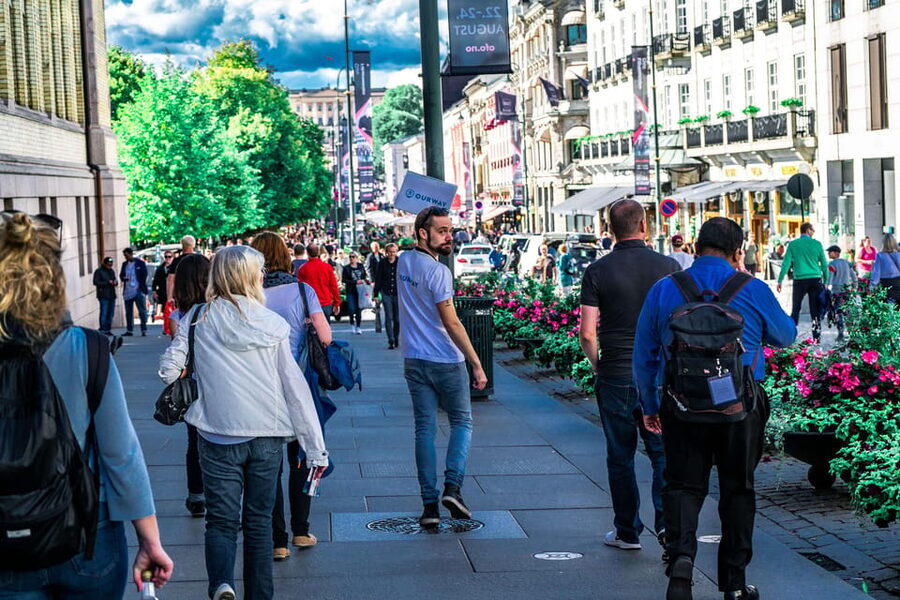
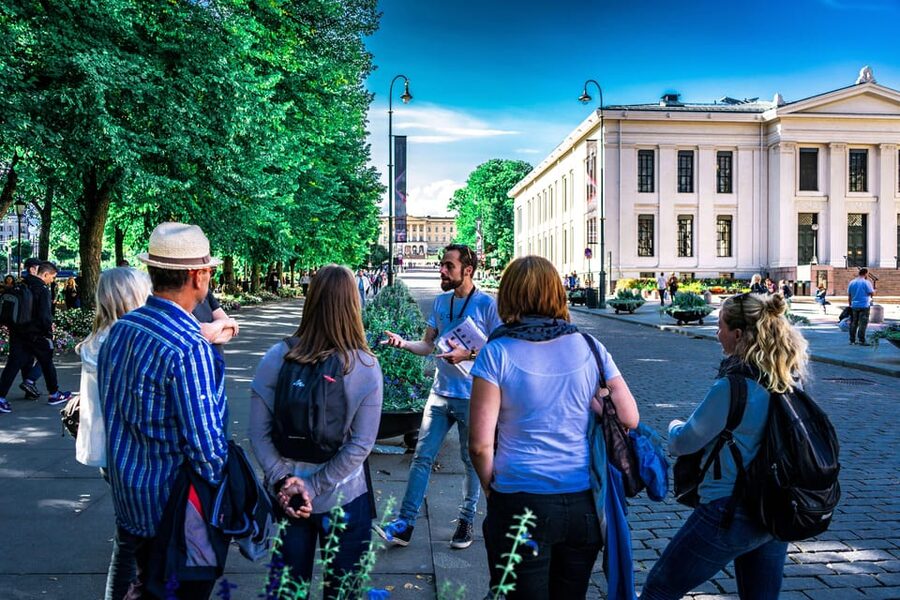
The route then moves toward the National Theatre and University Square. The National Theatre is an impressive example of Oslo’s formal architectural tradition, and its position helps mark the transition from the waterfront to the ceremonial heart of the city.
You will also pass the Royal Palace. The palace is the official residence of Norway’s monarch and sits at the upper end of the central axis leading down toward Karl Johans gate. The walk does not include a palace interior visit, so the value here is the explanation of the building, its role, and the way it anchors the city’s main avenue.
This section is especially useful for first-time visitors because it connects several places that can otherwise feel separate on a map. You are not just checking off a theatre, a square, and a palace. You are seeing how Oslo’s national institutions gather around a walkable central spine.
The guide’s role matters here. A good explanation can point out how the area is used today and how the buildings relate to Norway’s political and cultural life. The feedback from several bookings points to guides who answer questions rather than rushing through a prepared list.
A few more walking tours around Norway worth a look
- Oslo Nature Walks: Island Hopping Tour
★ 4.8 · 2,713 reviews - Bergen: Past & Present Small Group Guided Walking Tour
★ 4.9 · 1,609 reviews - Walking Tour in Bergen of the Past and Present
★ 5.0 · 1,575 reviews - Bergen: City Tour on Foot
★ 4.9 · 1,327 reviews
Karl Johans gate and the Norwegian Parliament
Karl Johans gate is Oslo’s main shopping street and one of the easiest places to understand the city’s rhythm. It connects key sights, shops, restaurants, and public buildings, so you will see Oslo as a lived-in capital rather than a museum district.
The street can also be busy and noisy. You should wear comfortable shoes and expect an urban walk with traffic sounds, crossings, and regular foot traffic. The route is not described as difficult, but two hours on pavement is still more comfortable in supportive shoes.
The Norwegian Parliament is another important exterior stop. Your guide can explain the building’s place in Norway’s political system and point out details you might walk past alone. If you enjoy seeing how a capital functions, this stop adds more than another grand facade.
I like this part of the route because it gives context to the Royal Palace and City Hall. You see the royal, civic, and political sides of Oslo within a short distance. That makes the walk useful even for people who are less interested in architecture.
Akershus Fortress above the Oslo Fjord
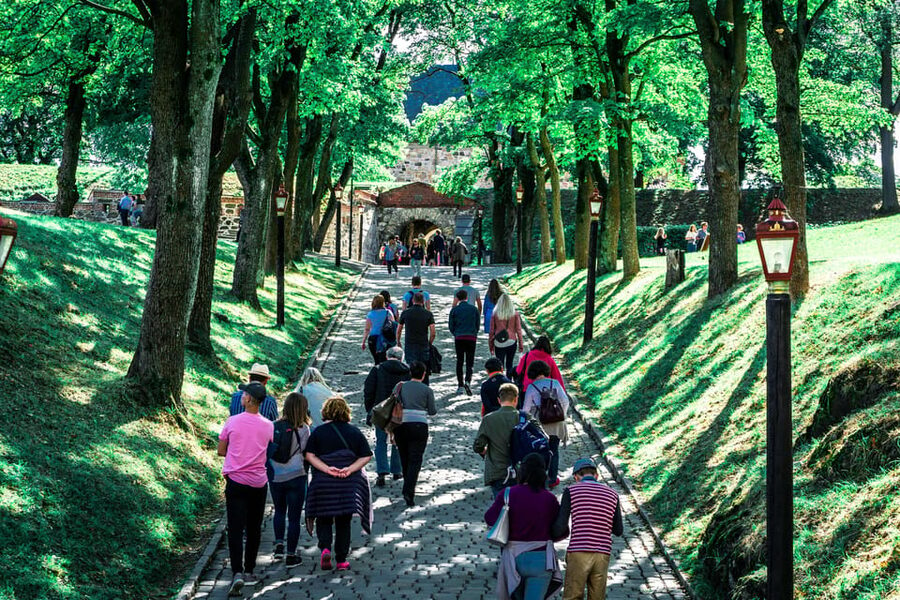
Akershus Fortress is one of the tour’s strongest stops. It overlooks the Oslo Fjord and brings military history into a route otherwise filled with civic and royal buildings. The fortress also helps explain why this site mattered long before the modern waterfront took shape.
The experience includes sightseeing at Akershus Fortress, but no interior admission is specified. You should think of this as an outdoor visit and a chance to take in the position, walls, and views. Depending on the exact pace and route, the fortress may involve uneven surfaces or slight inclines, so comfortable footwear is a practical choice.
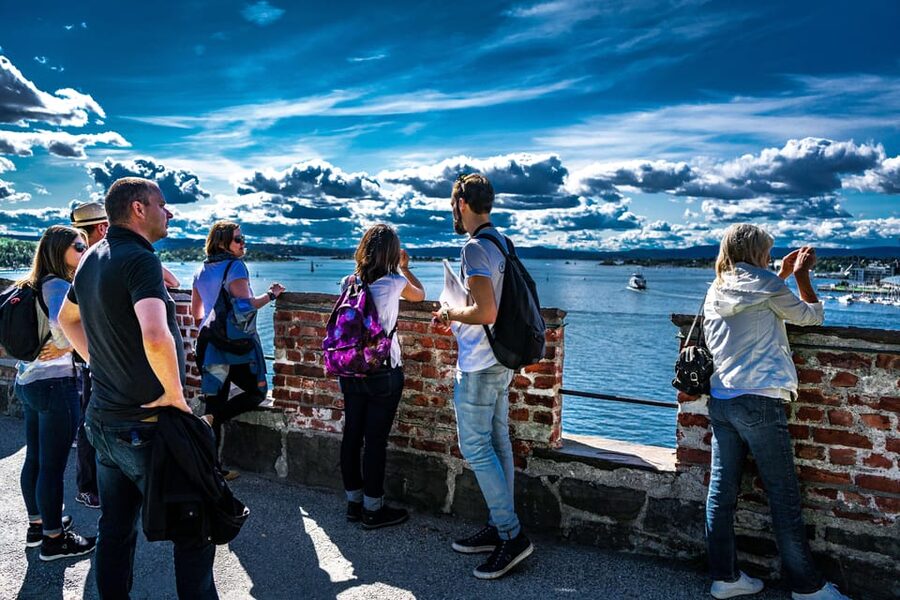
The setting gives you a welcome change from central streets. After the noise around Karl Johans gate and Parliament, the fortress offers a different mood and a wider view toward the water. It is also one of the best places on this walk to understand Oslo’s connection to the fjord.
If you have extra time after the tour, Akershus Fortress is worth revisiting at your own pace. The guided visit gives you the basic story and orientation, while a later return lets you linger.
Christiania Torv, the Bank Square, and the Stock Exchange
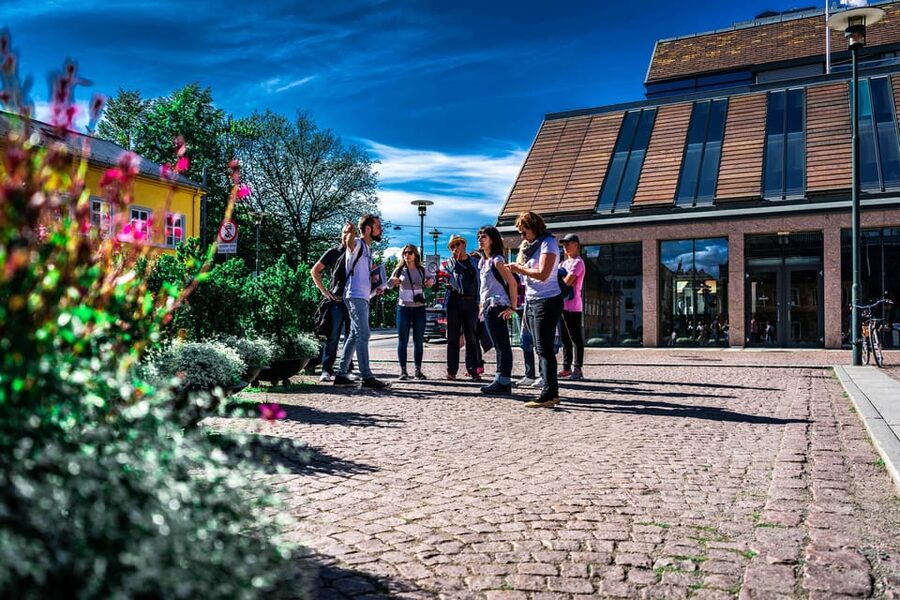
The walk continues through Christiania Torv and the Bank Square, places that help connect present-day Oslo with its earlier urban form. These stops are less instantly famous than the Opera House or Royal Palace, but they are important for understanding how the city developed after its relocation.
Christiania Torv carries the name of the city’s earlier period under Danish rule. That makes it a useful place to return to the story of King Christian IV and the rebuilt city. The Bank Square and Oslo Stock Exchange add a commercial side to the tour, showing that Oslo’s center has long been shaped by trade, finance, government, and shipping.
These are the kinds of stops that benefit from a guide. Without context, you might simply see another square or institutional building. With an explanation, the route becomes a lesson in how Oslo’s center changed over time.
The stops are sightseeing visits rather than long museum sessions. If you want a tour packed with interiors, art collections, or archaeological displays, this will feel too light. If you want a city framework that helps you explore alone later, the pace is sensible.
The Opera House and Oslo’s modern waterfront
The final major sight is the Oslo Opera House, with the tour finishing at Langkaia 1, near the waterfront. Its sloping white surfaces make it look like an iceberg rising from the harbor. The design is bold, open, and easy to experience from the outside because people can walk up across the roof.
The tour description encourages you to climb to the top after the guided portion. That suggestion matters because the roof gives you a different view of the building and the surrounding waterfront. The walk itself may end near the Opera House, so plan a little extra time if you want to make the climb rather than heading straight to your next appointment.
The area behind the Opera House also includes urban farming, an unexpected detail in a city known for cold weather. It shows the newer Oslo, where former waterfront and industrial areas are being used for public spaces, housing, culture, and food projects.
This final section gives the tour a satisfying change of tone. You begin with the Nobel Peace Center and the fjord, pass through royal and political Oslo, visit a fortress, then finish with a modern cultural building. The route feels broad without requiring public transport.
How much value do you get for $461?
The listed price is $461 per group up to one person. That wording is unusual, so check the exact booking total before paying, especially if you are traveling with more than one person. The advertised format is private, but the price details should be clear for your party at checkout.
For a solo participant, the cost is high for a two-hour walking tour. One booking specifically found the price excessive compared with the simplicity of walking around a compact city. That criticism is fair. Oslo’s center is accessible, and you can see many of these exteriors without a guide.
The case for the price is personal service. You get a private guide, a choice of six languages, direct answers, and a route shaped around your interests and pace. That can be valuable for a family, a short-stay visitor, or anyone who wants an efficient introduction without spending hours researching each building.
The value improves if you are sharing the cost with a private group, but the provided price display only states up to one person. Confirm how additional participants are handled. I would also compare the cost with a small-group tour or a self-guided visit if budget matters more than private attention.
Who will get the most from this tour?
I would choose this walk if you have only a few hours in Oslo and want the main central landmarks explained in a sensible order. It is also a good first activity because the route shows you where the palace, Parliament, fortress, waterfront, shopping street, and Opera House sit in relation to one another.
Families can benefit from the private setup. A guide named Inger is noted for adjusting to a group with children, and a private walk makes it easier to pause, shorten an explanation, or answer a child’s question. Still, the route is urban and takes two hours, so comfortable shoes and weather-ready clothing are essential.
Language choice is another strength. English, Spanish, French, German, Italian, and Norwegian are available. Make sure you select the language that works best for your group, since the quality of a history and architecture tour depends heavily on easy conversation.
I would be less likely to book it if I had a tight budget, already knew central Oslo, or wanted to enter museums and historic buildings. I would also avoid treating it as a quiet stroll. Traffic noise is part of the setting.
Practical details before you go
Meet outside the Nobel Peace Center at Brynjulf Bulls plass 1. Look for a guide holding a sign with the local partner’s name, and arrive a little early rather than trying to find the meeting point at the last second.
Wear comfortable shoes. The route covers city streets, public squares, and the fortress area, and the final section near the Opera House may tempt you to keep walking after the tour. Dress for the weather, since the experience is outdoors.
Starting times vary, so check availability for your preferred date. The tour lasts two hours, and free cancellation is available up to 24 hours before departure for a full refund. You can also reserve now and pay later, which helps if your Oslo plans are still shifting.
Should you book this Oslo walking tour?
Book it if you want a private, well-paced introduction and place a high value on asking questions. The route covers more than just the famous sights, linking the relocated city of Christian IV with the modern waterfront, and the guide can add local details that are easy to miss alone.
Think twice if $461 feels steep for an outdoor city walk. Oslo’s center is manageable without transport, and none of the listed stops includes an interior visit. For a short stay, a family group, or a first afternoon in town, the personal guidance can justify the cost. For an independent budget visit, use the route as your own walking plan and spend the money elsewhere.
FAQ
Where does the Oslo private walking tour begin?
It begins outside the Nobel Peace Center at Brynjulf Bulls plass 1. The guide is expected to arrive about 10 minutes before departure and will hold a sign with the local partner’s name.
Where does the tour finish?
The tour finishes at Langkaia 1, 0150 Oslo, near the Oslo Opera House and the waterfront.
How long does the walking tour last?
The guided tour lasts two hours.
Which languages are available?
The live guide can conduct the tour in Spanish, English, French, German, Italian, or Norwegian.
Is the tour private?
Yes. It is offered as a private group experience.
What should I bring?
Bring comfortable shoes and clothing suited to the weather. Most of the route is in Oslo’s city center, where traffic noise is unavoidable.
Just added around Norway
- City Walking Tour – Bergen On Foot★ 5.0 · 436 reviews
- Food and Culture walk★ 4.5 · 243 reviews
- Discover Bergen on Foot and Boat★ 5.0 · 300 reviews
- 3 Hour Guided Food Walk Tour in Alesund, Norway★ 5.0 · 124 reviews
- Stavanger: Private Walking Tour with a Local★ 4.5 · 100 reviews
- Oslo: Private Walking Tour with a Local★ 4.5 · 263 reviews
- Oslo: Norwegian Food Tour & Hidden Gems City Walk★ 4.8 · 165 reviews
- Oslo: Snowy Forest Torchlight Walk with Campfire★ 4.6 · 254 reviews
Private Walking Tours, compared.
Barcelona Helicopter, Sailboat & Old Town Private Walking Tour
Read our review →
Lyon: Private Walking Tour of “Traboules” in the Old Town
Read our review →
Browse the lists this tour appears in