

REVIEW · NEW ORLEANS
New Orleans: Garden District Guided Walking Tour
The most memorable part of this Garden District walking tour is the way grand houses, old trees, and above-ground tombs bring New Orleans history down to street level. You’ll hear how risk-takers and speculators turned land outside the old city into a wealthy suburb after the Louisiana Purchase, then see the architecture they left behind.
I like two things here: the two-hour length, which gives you enough time for real stories without turning the walk into an all-day march, and the guides’ personal touch. James, Renee, Libby, Yvonne, Jackie, Lesley, and others have been praised for mixing architecture, local culture, humor, and practical tips. The main drawback is Lafayette Cemetery No. 1, which is currently closed to the public, so you can only look through the gates.
Key points to know before you book

- Lafayette Cemetery No. 1 is viewed through the gates: You’ll learn about New Orleans’ above-ground burial customs, but you cannot enter the cemetery while it is closed.
- Architecture is the main attraction: Expect ornate antebellum-style homes, ironwork, gardens, and explanations of how the district developed.
- Guide quality matters here: James, Renee, Libby, Yvonne, Jackie, and Lesley have all led especially engaging walks, though your assigned guide may differ.
- Magazine Street is a useful finish: Plan lunch, coffee, or shopping after the tour rather than treating the walk as a stand-alone stop.
- The pace is manageable but the ground is uneven: Wear sturdy shoes. Wheelchair access is offered, but the surfaces may make the walk harder.
- At $35, the value is strongest for first-time visitors: You’re paying for local context, storytelling, and a clear introduction to one of New Orleans’ most distinctive neighborhoods.
Why the Garden District is worth two hours
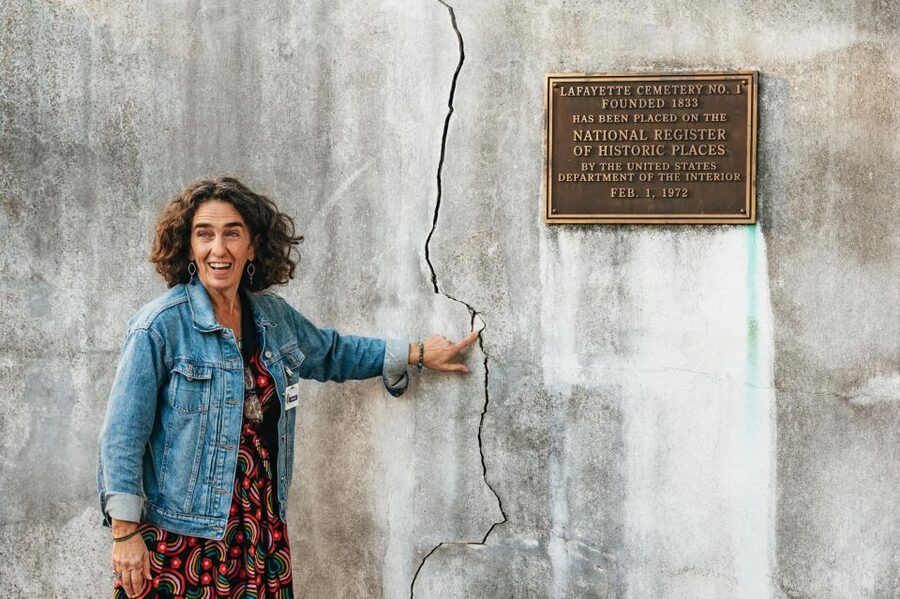
The French Quarter gets most of the attention in New Orleans, but the Garden District shows you a different side of the city. Here, the streets are broad and leafy, the homes are set behind fences and gardens, and the mood is more residential than theatrical.
I like this tour because it does not treat the neighborhood as a collection of pretty façades. The guide explains who built these houses, why the district became fashionable, and how its architecture reflects the city’s changing fortunes. That context makes the walk far more useful than simply wandering past expensive-looking homes and guessing about their age.
You should also expect a good amount of storytelling. The guides bring up risk-takers, speculators, dreamers, and the people who shaped the neighborhood. The best guides, including James and Renee, have been praised for answering questions and connecting the district’s past with present-day New Orleans.
At $35 per person, this is not the cheapest way to see a neighborhood. Still, two hours with an English-speaking guide is a fair price if you want more than photographs. It is particularly good value early in your New Orleans visit, since guides often offer suggestions for food, sightseeing, and further exploration.
More Guided Tours in New Orleans:
- Magical London: Harry Potter Guided Walking Tour
★ 4.7 · 22,044 reviews - History and Hauntings of Salem Guided Walking Tour
★ 5.0 · 14,564 reviews - Amsterdam Anne Frank: Small-Group Walking Tour & Local Guide
★ 4.8 · 12,789 reviews
Starting with the Garden District’s origins
The walk begins with a short introduction to New Orleans and the Garden District. This opening matters because the neighborhood can seem simple at first glance: large houses, old trees, and quiet streets. The story underneath is more complicated.
After the Louisiana Purchase, the area developed as a wealthy suburb outside the older center of New Orleans. The people who invested here were not all established aristocrats. Some were speculators and business-minded newcomers taking a chance on land and the city’s future.
That background helps explain why the houses feel different from the French Quarter. The Garden District’s antebellum-style architecture reflects the ambitions of people who wanted large homes, gracious streets, and a visible display of success.
You’ll hear about the architectural roots of the neighborhood as you walk. Guides may point out details such as façades, porches, gardens, ironwork, and the relationship between a house and the street. I find this kind of explanation especially useful because it teaches you what to look for during the rest of your visit.
Strolling under the live oaks

The Garden District is at its best on foot. The leafy streets provide shade and a slower pace, while the houses give the guide frequent chances to stop and explain a detail that you might otherwise miss.
The walk is not built around entering private homes. Instead, you view the houses from public streets and listen to the stories connected with them. That is important to understand before booking. This is an exterior architecture and history tour, not a mansion interior visit.
The homes are the visual reward, but the guide’s narration gives them meaning. One house may represent wealth, another a family’s ambition, and another a later chapter in the district’s life. Stories about residents and local characters keep the walk from becoming a dry lesson in architectural terms.
Several guides have been praised for their ability to make this material lively. James is often described as funny, welcoming, and open to questions. Renee has been noted for combining local knowledge with personal stories, while Libby is especially good at joining history, architecture, and New Orleans culture.
Your experience will depend partly on the guide assigned to your time slot. That is normal on a walking tour, but it is worth considering. A strong guide makes the houses feel connected. A less engaging presentation would leave you admiring the scenery without gaining as much context.
Lafayette Cemetery No. 1 through the gates

Lafayette Cemetery No. 1 is one of the tour’s most distinctive stops. It is a National Historic Landmark and an important place to discuss New Orleans burial customs.
At present, the cemetery is closed to the public. You’ll look through the gates rather than walk among the tombs. That limitation is disappointing if you hoped to inspect the vaults closely, but the stop still works because the guide explains how above-ground interment developed and why it became such a visible part of the city.
The cemetery’s tombs are not just an unusual sight. They reflect local conditions, customs, and the way New Orleans remembers its dead. A good explanation turns the view from the sidewalk into a lesson about place and tradition.
This part may appeal especially to fans of New Orleans television and film settings. One recent visitor particularly enjoyed the discussion because of an interest in The Vampire Diaries and The Originals. You do not need to know those shows to appreciate the stop, but the cemetery’s appearance has made it familiar to many pop-culture fans.
Because access is restricted, keep your expectations clear. You will not get a full cemetery visit, and the view through the gates may be brief. Still, it is one of the most worthwhile moments of the walk because it covers a subject you will not understand fully by simply passing a tomb on your own.
A few more walking tours around New Orleans worth a look
- New Orleans Premier Ghost, Voodoo and Vampire Walking Tour
★ 4.5 · 12,856 reviews - New Orleans Food Walking Tour of the French Quarter with Small-Group Option
★ 5.0 · 6,118 reviews - St. Louis Cemetery No. 1 Official Walking Tour
★ 4.5 · 3,941 reviews - New Orleans French Quarter, Voodoo and Culture Walking Tour
★ 4.5 · 2,961 reviews
Stories about people, not just buildings

The strongest part of this experience is its human scale. The district’s houses are impressive, but they become more interesting when you hear about the people who established the neighborhood and the social world they created.
The guides discuss the risk-taking and speculation that helped turn the area into a wealthy suburb. They also bring in stories about residents, changing fortunes, and the culture of New Orleans. Several guides have added personal observations about the city today, including comments on local infrastructure and daily life.
That mix of old and new is valuable. You are not being asked to view the Garden District as a frozen museum. It remains a living neighborhood, and the guide helps you notice the difference between its historic image and its present-day role.
The tone is generally relaxed rather than academic. James has been praised for humor and for making time pass quickly. Yvonne and Jackie have been praised for their warmth and enthusiasm, while Lesley has been noted for adapting the discussion to questions about particular houses.
If you have a specific home or architectural feature you want to ask about, bring it up during the walk. One guide made time for houses the group had asked about, and several guides have been described as responsive to questions. There is no guarantee that every request can be covered, but speaking up can make the tour more personal.
A look at architecture without a lecture

You do not need an architecture background for this walk. The guide explains the Garden District’s antebellum style in plain terms and points out the features that make the neighborhood distinctive.
I especially like this format because the information comes at the moment you can see it. Instead of memorizing a list of building styles, you look at a porch, garden, façade, or gate while the guide explains its role.
The district’s beauty can also hide its complexity. Large houses and trimmed gardens suggest comfort, but the tour is about more than admiration. It also considers the people and forces that allowed the neighborhood to develop, including money, land speculation, social position, and the city’s growth.
Guides have also brought in botanical details. Renee has been praised for knowing the flowers as well as the houses, and another guide was noted for discussing both architecture and plants. That is a useful bonus if you enjoy gardens and street trees as much as buildings.
The experience is best for people who like a mixture of visual detail and local stories. If you only want to photograph mansions, you can walk the area independently. If you want to understand why the district looks the way it does, the guide adds real value.
Ending near Magazine Street
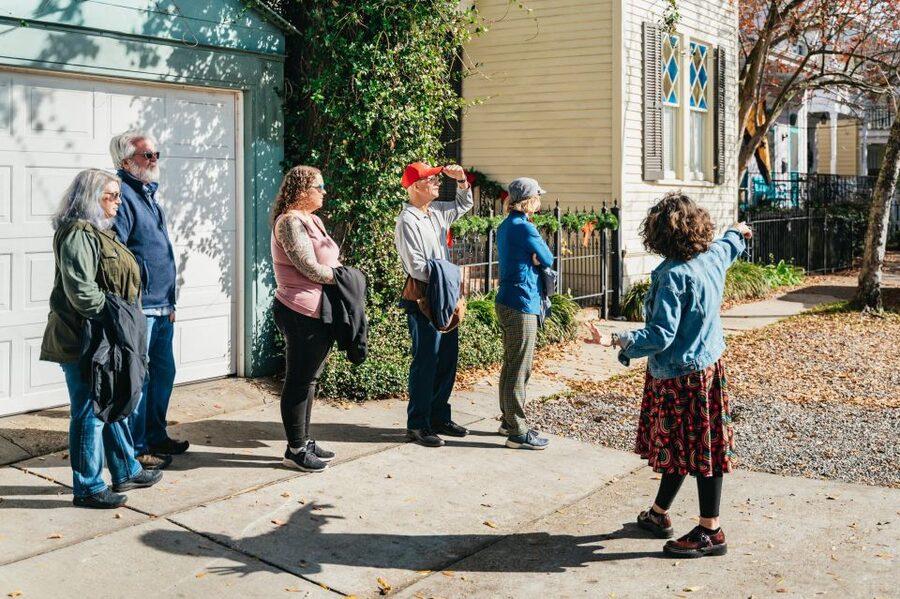
The walk ends near Magazine Street, one of the most practical features of the route. You can continue exploring the Garden District, look again at the cemetery from outside, or move on to shopping and dining.
I would plan the rest of your day around this finish. A meal or coffee nearby gives you time to sit with what you have seen, and Magazine Street offers an easy change of pace from the quiet residential blocks.
Several guides have offered useful onward suggestions, including lunch ideas and places to visit around New Orleans. One person specifically enjoyed stopping at Gracious Bakery after the tour. That recommendation is not part of the formal tour, but it shows why it helps to ask your guide for practical advice before you leave.
The finish also makes this a good choice for a first or second day in the city. You get an introduction to a major neighborhood and end in an area where you can continue without arranging another activity.
Timing, comfort, and access

The tour lasts two hours. That is long enough to cover the district’s origins, architecture, cemetery customs, and local stories, while still leaving most of your day free.
Walking surfaces in the area are uneven, so sturdy shoes are strongly recommended. This is not the time for delicate sandals or shoes with little support. The route is listed as wheelchair accessible, but uneven ground may still make the experience more difficult, so consider your own comfort and mobility needs carefully.
Weather can affect the experience. The tour takes place outdoors, and the walk may feel very different in heat, cold, or rain. A guide has adjusted the pace and presentation for cold weather, and another group continued through rain, but you should still dress for the conditions.
Pets and smoking are not allowed. The tour is conducted in English, so it suits visitors comfortable following a spoken history and architecture presentation.
Meeting points can vary by the option booked. Check the exact location before setting out, especially if you are coming from another part of New Orleans.
Who will enjoy this tour most
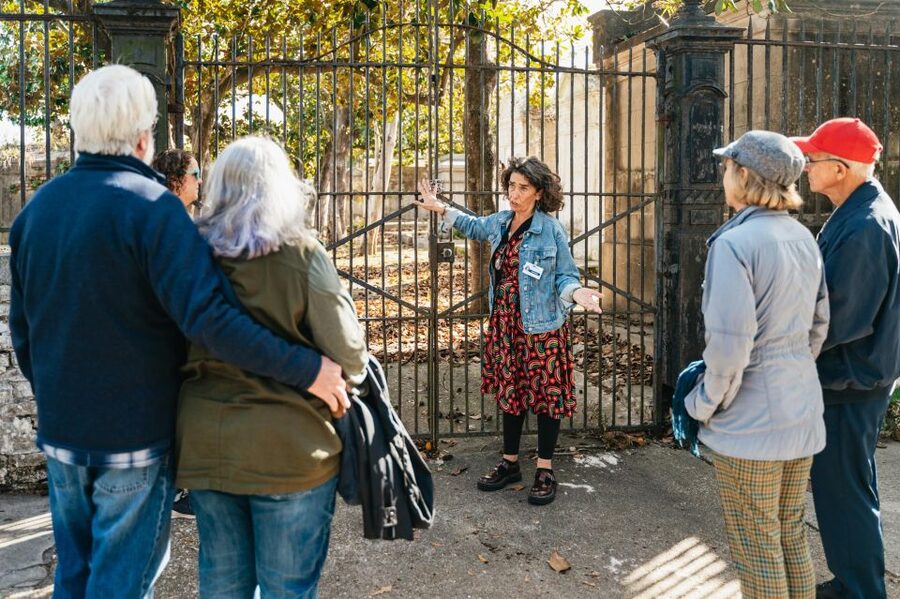
I would recommend this walk to first-time visitors who want to see beyond the French Quarter. It is also a strong pick for anyone interested in architecture, cemetery traditions, local personalities, gardens, or the social forces that shaped New Orleans.
Families and older visitors may appreciate the manageable two-hour format, though everyone should be ready for uneven walking surfaces. The tour can also work well for couples, solo visitors, and small groups looking for a calm activity between meals and evening plans.
You may want to skip it if your main goal is entering historic homes or walking through Lafayette Cemetery. Neither is available here. You might also prefer an independent stroll if you do not enjoy guided storytelling or stopping often to discuss buildings.
The guide makes the greatest difference. James, Renee, Libby, Yvonne, Jackie, Lesley, Betsy, Tim, and others have each been praised for humor, warmth, local pride, and clear explanations. Names and availability can change, so book this for the subject and format rather than expecting one particular person.
Should you book the Garden District walk?
Book it if you want a well-paced introduction to one of New Orleans’ most beautiful neighborhoods, with enough history to explain what you are seeing. At $35, the tour earns its price through local stories, architectural guidance, cemetery context, and useful suggestions for the rest of your visit.
Just remember the limits: Lafayette Cemetery No. 1 is currently closed, the tour stays outdoors, and the ground can be uneven. If those points suit your plans, this is a practical, enjoyable way to spend two hours and finish near Magazine Street with the rest of New Orleans still ahead of you.
FAQ
How long is the Garden District walking tour?
The tour lasts two hours.
How much does the tour cost?
The listed price is $35 per person.
What language is the tour conducted in?
The tour is conducted in English with a live guide.
Can I enter Lafayette Cemetery No. 1?
No. Lafayette Cemetery No. 1 is currently closed to the public. You can look through the gates and hear about its above-ground burial customs.
Is the tour wheelchair accessible?
The activity is listed as wheelchair accessible. However, the area has uneven walking surfaces, so sturdy shoes and careful planning are recommended.
What should I wear?
Wear sturdy walking shoes because the walking surfaces can be uneven. Dress for the outdoor weather during your visit.
Where does the tour end?
The tour ends near Magazine Street. From there, you can continue exploring the Garden District or look for shopping and dining nearby.
Just added around New Orleans
- New Orleans: Witches Coven Garden District Walking Tour★ 4.9 · 113 reviews
- New Orleans: 2-Hour Homes of the Rich & Famous Walking Tour★ 4.6 · 115 reviews
- New Orleans: French Quarter Ghost and Legends Walking Tour★ 4.3 · 129 reviews
- New Orleans: Five-in-One City Walking Tour★ 3.8 · 272 reviews
- New Orleans: French Quarter Photo Shoot and Walking Tour★ 5.0 · 74 reviews
- New Orleans: City & Cemetery Tour + Garden District Stroll★ 4.7 · 128 reviews
- New Orleans: Drunk History Walking Tour★ 4.2 · 165 reviews
- New Orleans: 2 or 3 Day Hop-On Hop-Off Bus with Walking Tour★ 4.5 · 291 reviews
Walking Tours, compared.

Magical London: Harry Potter Guided Walking Tour
Read our review →
Reykjavik Food Walk – Local Foodie Adventure in Iceland
Read our review →
History and Hauntings of Salem Guided Walking Tour
Read our review →
New Orleans Premier Ghost, Voodoo and Vampire Walking Tour
Read our review →
Amsterdam Anne Frank: Small-Group Walking Tour & Local Guide
Read our review →

Edinburgh Castle: Guided Walking Tour with Entry Ticket
Read our review →
Anne Frank’s Story – Guided Walking Tour through Amsterdam
Read our review →Browse the lists this tour appears in