
REVIEW · WALKING TOURS
Hong Kong: Dark Side of Hong Kong Caged Homes Walking Tour
Hong Kong’s glittering skyline hides a housing crisis that becomes painfully clear inside a 100-square-foot subdivided flat. This two-hour walk through Mong Kok and Sham Shui Po explains how land scarcity, population growth, and policy have pushed rents beyond reach for many residents.
I like the vacant sample flat, which lets you see the cramped layout without intruding on anyone’s home. I also like the visit to SoCo, where the tour connects what you have seen to practical work for marginalized communities. The hard part is the subject itself: this is not a light sightseeing walk, and some stops may feel uncomfortable.
Key points to know before you go

- A real look at cage homes: See how a metal enclosure can serve as a single resident’s bedroom, kitchen, and living area.
- A 500-square-foot apartment split five ways: Learn how an ordinary flat can be divided into several tiny units.
- Guides bring personal context: Stephen, Alice, Summer, Michael, Isaac, Wind, and others lead different departures, often adding their own experience of Hong Kong’s housing pressures.
- The walk links policy to daily life: Land supply, high property prices, capitalism, and population growth are explained in plain terms.
- A rooftop slum changes your view of the skyline: You see dwellings that are easy to miss from street level.
- It ends with a social purpose: SoCo has advocated for marginalized residents for more than 50 years.
Why this two-hour walk changes how you see Hong Kong
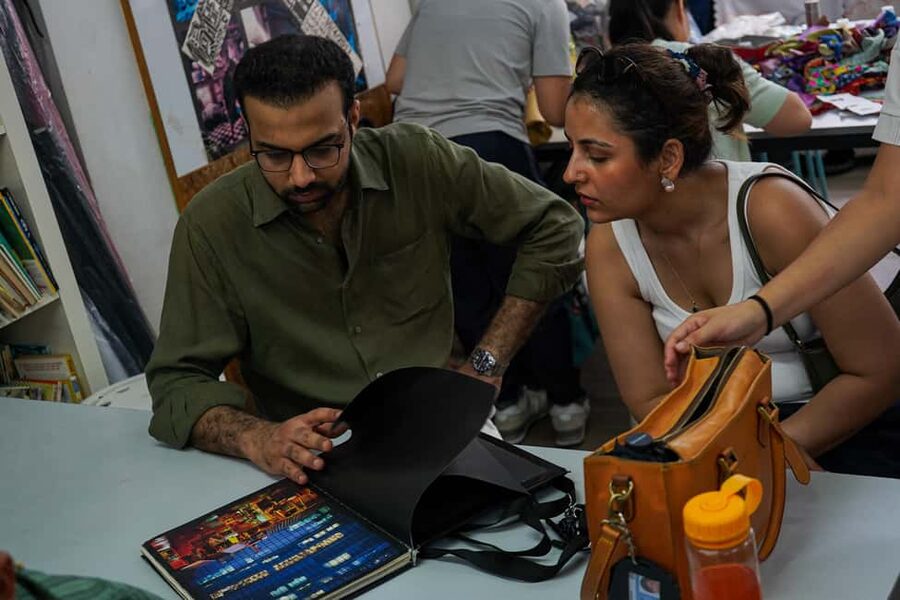
Hong Kong is famous for tall towers, polished shopping malls, and some of the world’s most expensive real estate. This tour asks you to look lower, into the older buildings and narrow streets of Kowloon, where many people live with far less space than the city’s glossy image suggests.
The focus is not poverty as spectacle. The guide explains how the housing problem developed and why it remains so difficult to solve. You hear about land policy, population growth, capitalism, and the shortage of affordable homes before seeing the physical result inside subdivided flats and cage homes.
That order matters. Without context, a cramped room can become a quick photograph and a sad story. With context, you begin to understand the chain connecting government decisions, the property market, wages, and the daily choices made by low-income residents.
The tour starts inside Prince Edward MTR Station at Exit D, near Playing Field Road. From there, you walk south toward Mong Kok and Sham Shui Po. The route is short enough to fit into a morning or afternoon, but it is not a passive sightseeing trip. You move through busy streets, older buildings, staircases, and back lanes.
A few more walking tours around the world worth a look
- Magical London: Harry Potter Guided Walking Tour
★ 4.7 · 22,044 reviews - Reykjavik Food Walk – Local Foodie Adventure in Iceland
★ 5.0 · 18,952 reviews - History and Hauntings of Salem Guided Walking Tour
★ 5.0 · 14,564 reviews
Prince Edward to Mong Kok: starting with the property paradox
The opening discussion sets up Hong Kong’s central contradiction. It is one of the world’s richest and most visually impressive cities, yet around 1.5 million residents live in poverty, according to the tour information.
A local real estate agent helps explain why housing costs are so extreme. You learn how a typical 500-square-foot apartment can be divided into five separate units. That figure becomes more meaningful once you consider that the same small space may need to hold a bed, cooking area, toilet, storage, and living space for one person or a family.
The guides also put a human face on the numbers. Several guides, including Stephen, Summer, Alice, Michael, and Wind, have been praised for explaining the issue with care rather than turning it into a grim lecture. Guide assignments can vary, so you should not book expecting one specific person, but the experience is built around a live English-speaking guide.
One useful feature is the chance to ask questions as you go. If you are interested in economics, city planning, or housing policy, this part gives you plenty to think about. If you prefer a standard city tour focused on temples, food, or architecture, you may find the opening discussion too serious.
The sample flat: 100 square feet with no wasted corner
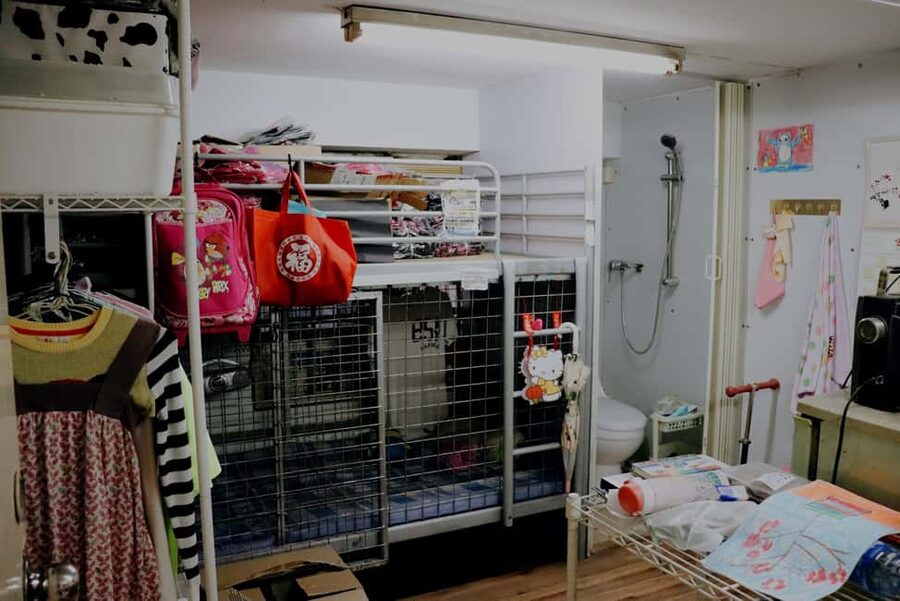
The most powerful stop is the visit to a vacant subdivided flat. The unit is about 100 square feet, or roughly 10 square meters. That is not the size of a bedroom in many homes. Here, it can include the kitchen, bed, toilet, and living area.
This is not an occupied home. The space has been rented and maintained for the tour, so you are not walking through someone’s private residence. That distinction matters, especially if you worry that poverty tours can cross a line into intrusion.
Inside, the point is not simply that the room is small. The point is how many functions must fit into it. A family may cook, sleep, wash, store possessions, and spend free time in one cramped area. For a single resident in a cage home, a metal enclosure can become the entire living quarter.
The sample flat gives you a physical reference that photographs cannot. A statistic about 10 square meters is easy to forget. Standing inside the space, you can see how quickly a bed, toilet, sink, cooking equipment, and personal belongings consume the room.
You should expect the stop to be brief rather than an extended museum visit. It works best as part of the wider explanation, not as a standalone attraction. The value comes from the guide showing how the unit fits into the property system and the income pressures discussed earlier.
Sham Shui Po: where wealth and hardship sit close together
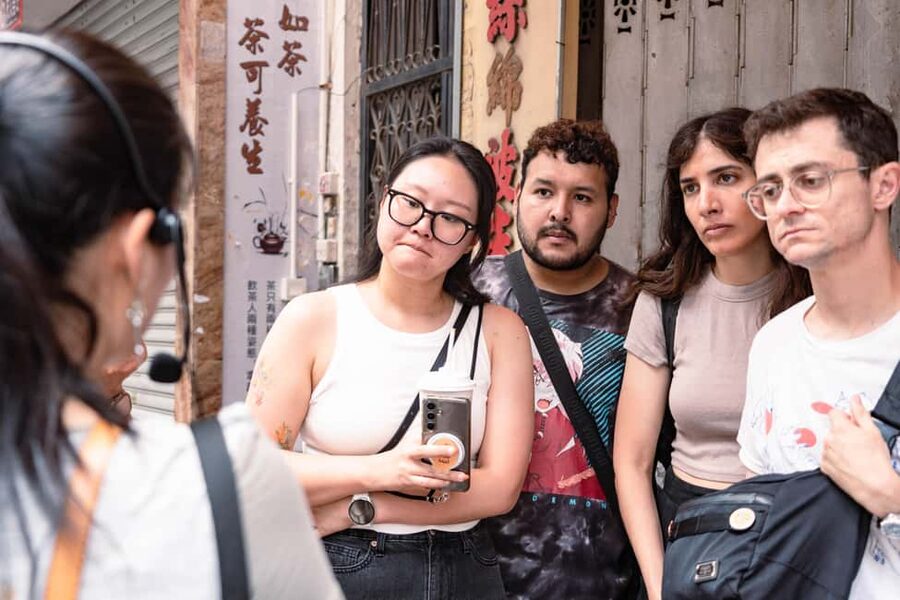
The route continues into Sham Shui Po, one of Hong Kong’s poorest districts. Here, the contrast with the city’s newer apartment towers becomes sharper. Older tenement buildings and subdivided flats sit near expensive developments, making the income gap visible within a few blocks.
You may pass ordinary shops, local streets, and older buildings while the guide points out what is easy to miss. The tour describes an underworld of hidden housing arrangements, rooftop dwellings, and dense clusters of small flats. You are not simply walking through a poor neighborhood. You are learning how people adapt when formal housing costs more than their wages can support.
The streets can be crowded, and the route includes stairs and older buildings. Wear comfortable shoes. The walk may not suit people with limited mobility, especially because the experience moves through active urban areas rather than a smooth museum setting.
This is also the point where the tour can feel emotionally heavy. You may find yourself thinking about how little privacy or personal space some residents have. The strongest guides keep the discussion respectful and explain the causes without treating residents as objects of pity.
Same streets, a different route:
- New Orleans Premier Ghost, Voodoo and Vampire Walking Tour
★ 4.5 · 12,856 reviews - Amsterdam Anne Frank: Small-Group Walking Tour & Local Guide
★ 4.8 · 12,789 reviews - Edinburgh: Harry Potter Magical Guided Walking Tour
★ 4.8 · 11,944 reviews - Edinburgh Castle: Guided Walking Tour with Entry Ticket
★ 4.7 · 11,699 reviews
The rooftop slum: an unseen layer above the streets

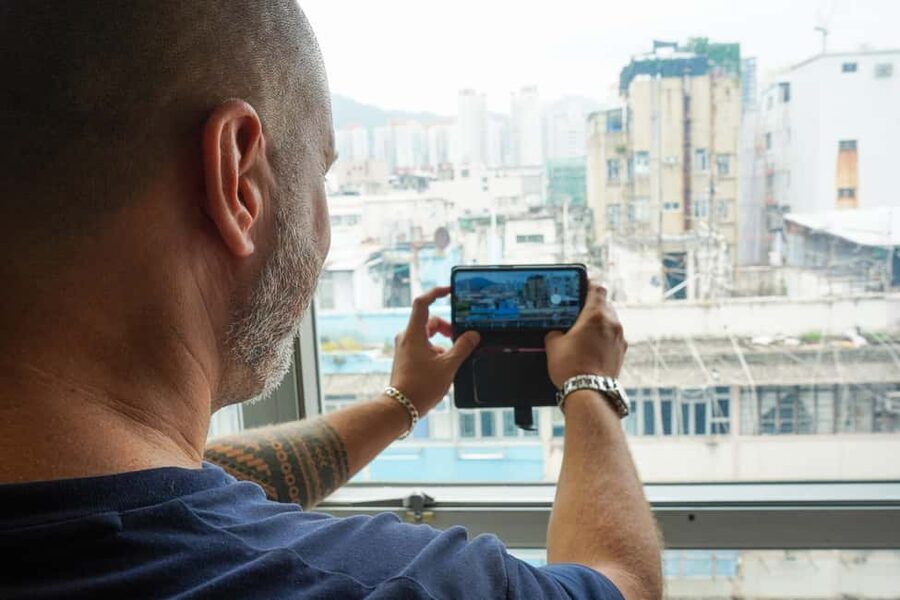
One of the most unusual parts of the walk is the view of rooftop slums. From street level, Hong Kong’s high-rises can make the city seem tightly planned and modern. On rooftops, you may see a far less polished side of that same city.
The rooftop stop is valuable because it changes your sense of vertical space. Hong Kong does not only grow upward through office towers and apartment blocks. People have also created makeshift homes in places most visitors never notice.
This stop is about observation rather than entertainment. You are looking at a difficult housing reality, not visiting a novelty attraction. Listen carefully to the guide’s explanation and avoid treating the dwellings as photo props. The walk is designed to encourage attention and reflection, not careless sightseeing.
The contrast is stark: luxury apartments and dense subdivided flats, modern towers and improvised rooftop homes, impressive property values and residents struggling to secure basic space. That contrast is the thread running through the entire experience.
SoCo: ending with action instead of shock
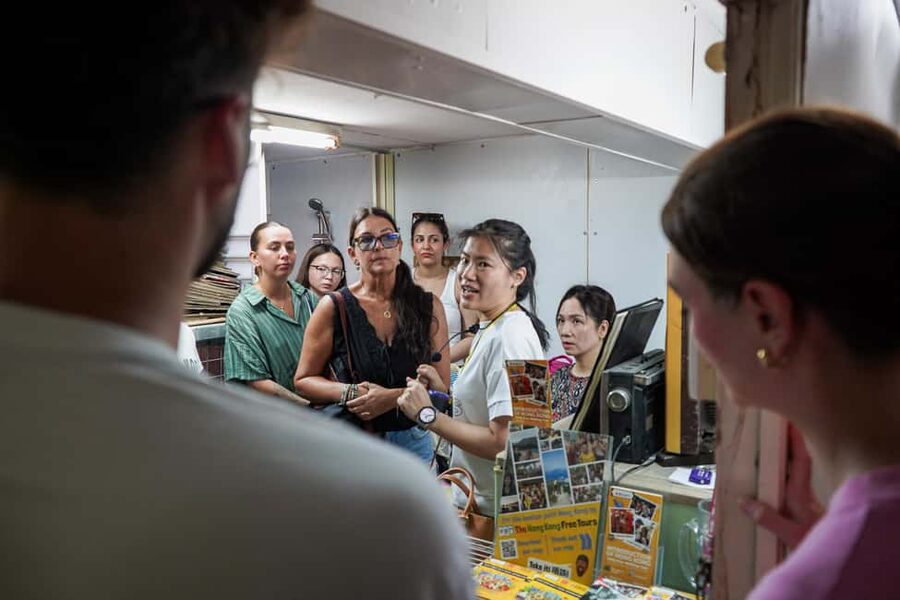
The tour finishes at SoCo, a local charity that has advocated for marginalized communities for more than 50 years. This is an important choice of final stop because the walk does not end with the bleakest image and leave you there.
At SoCo, the discussion turns toward the challenges facing Hong Kong and possible solutions for its future. You get a chance to connect the housing conditions you have seen with advocacy and community work.
Some departures may include information about social organizations and publications related to subdivided housing. One useful tip is to carry some cash if you may want to buy a book or make a donation, since card payment may not be available for every such purchase.
The visit does not promise an easy answer. Hong Kong’s housing pressures involve land supply, property prices, population density, wages, and public policy. Still, ending with an organization working on behalf of low-income residents gives the tour a sense of purpose.
What the guides do well
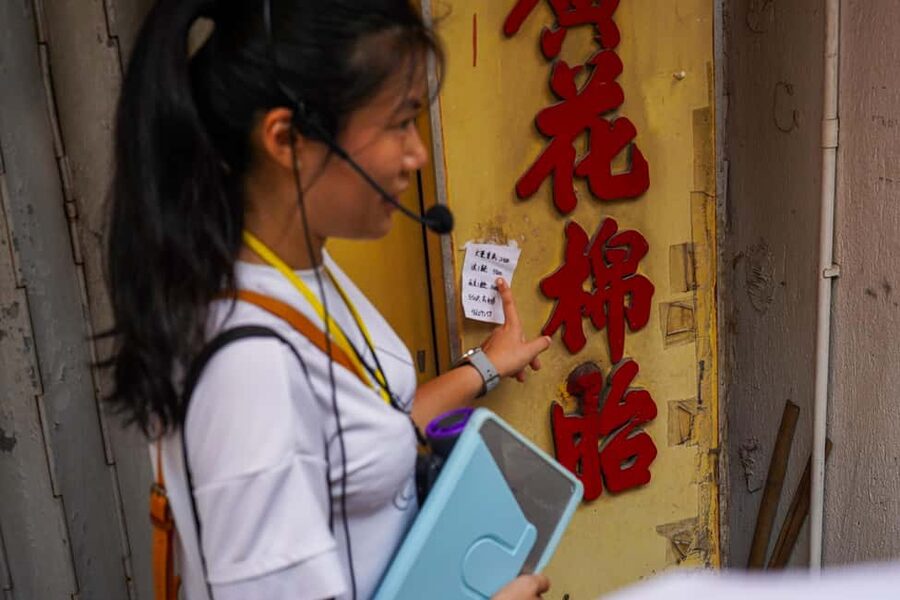
The guide makes or breaks a serious walking tour. This experience uses different English-speaking guides, and the named guides include Stephen, Alice, Summer, Michael, Isaac, Wind, Simeone, and others.
Stephen is often noted for explaining Hong Kong’s property market clearly and for sharing his connection to the city. Alice is described as especially strong on statistics, financial information, and the social effects of the housing crisis. Summer brings strong passion for affordable housing and the underclass, while Michael is associated with thoughtful explanations of poverty and the charity visit.
Wind is known for an empathetic approach, and Isaac is praised for his understanding of Mong Kok and for answering questions. These descriptions point to a consistent strength: the guides do more than recite facts. They explain how the issue affects ordinary people and invite questions.
Guide quality can vary from one departure to another, as it does on any walking tour with several staff members. Still, the repeated emphasis on sensitivity, clarity, and personal connection is encouraging. The best guides help you think about the issue without making the tour feel hopeless.
Is $31 a fair price?

At $31 per person, the tour costs more than a basic self-guided walk through Sham Shui Po, but you are paying for access, interpretation, and a purpose-built sample flat. You could walk through the district for free. You would not get the same explanation of the housing system, the organized route, or the chance to connect the streets with SoCo.
The vacant flat is a major part of the value. It gives you a clear, respectful way to understand cage-home conditions without entering an occupied home. The local guide is equally important, since land policy and property economics can be hard to grasp without someone translating them into ordinary language.
Food and drinks are not included, and hotel pickup is not provided. That is not a serious drawback because the route begins at an MTR station and ends near Sham Shui Po MTR Station, where you can continue exploring or find something to eat.
The two-hour length is useful if you have limited time in Hong Kong. You get a focused look at one issue without giving up an entire day. The tradeoff is that the tour cannot cover every part of the city’s housing system in detail.
Who should book this experience?
I would recommend it if you want to understand Hong Kong beyond shopping streets, skyscrapers, and famous viewpoints. It suits people interested in economics, urban planning, social policy, architecture, and modern city life.
It is also a good choice if you have visited Hong Kong before and want a different angle. The route gives you local context in neighborhoods many short-term visitors pass through without understanding.
You should think twice if you want a cheerful sightseeing morning. The subject includes poverty, overcrowding, minimum-wage living, and limited housing options. Some people may find the tone too serious, and the walking conditions are not ideal for anyone with limited mobility.
Bring comfortable shoes and prepare to listen. If you take photographs, do so with discretion, especially around occupied buildings and residents. The experience works best when you treat the neighborhood as a community, not a stage.
Practical details that affect the experience
The tour lasts two hours and is conducted in English with a live local guide. Meet inside Prince Edward MTR Station at Exit D, not outside the station. The walk ends at 北河街街市及熟食中心, close to Sham Shui Po MTR Station.
The route includes busy streets, staircases, and older buildings. Weather can affect the tour, and a cancellation caused by poor conditions gives you the choice to reschedule or receive a full refund.
You can cancel up to 24 hours ahead for a full refund, and the reserve-now, pay-later option lets you hold a place without paying immediately. Check the available starting time when booking, since the tour schedule can change.
Should you book the Dark Side of Hong Kong walk?
Book it if you want a serious, well-guided look at the housing pressures behind Hong Kong’s polished image. The sample flat, rooftop dwellings, property discussion, and SoCo visit create a clear progression from cause to consequence to community action.
Skip it if you are not comfortable with poverty-focused tourism or if you need a fully accessible route. For the right visitor, $31 is fair value, especially because the tour provides a respectful sample home and a guide who can explain the forces behind what you see.
I would place it early in a Hong Kong visit if you want the rest of the city to make more sense. After this walk, the towers, rents, older buildings, and crowded neighborhoods carry a much larger story.
FAQ
Where does the tour begin?
It begins inside Prince Edward MTR Station at Exit D, near Playing Field Road.
Where does the tour end?
It ends at 北河街街市及熟食中心, near Sham Shui Po MTR Station.
How long does the tour last?
The tour lasts two hours.
What language is the tour conducted in?
The live tour guide speaks English.
How much does the tour cost?
The price is $31 per person.
Does the tour enter a real occupied home?
No. The subdivided flat used during the tour is vacant and maintained for the experience, so you are not entering someone’s current home.
What housing conditions will I see?
You will learn about subdivided flats and cage homes, including a small unit combining sleeping, cooking, toilet, and living space.
Does the tour visit a rooftop slum?
Yes. The route includes a stop offering a view of hidden rooftop dwellings.
Is food included?
No. Food and beverages are not included.
Is the tour suitable for people with limited mobility?
The route includes busy streets, staircases, and older buildings, so it may not be suitable for people with limited mobility. Comfortable shoes are recommended.
Can I cancel for a refund?
Yes. You can cancel up to 24 hours in advance for a full refund.
What happens if bad weather cancels the tour?
You can reschedule or receive a full refund if the experience is canceled because of poor weather.
Just added around the world
- Fira: Guided Foodie Walking Tour with Tastings★ 4.9 · 474 reviews
- Fez: Guided Walking Tour of the Historic Medina★ 5.0 · 359 reviews
- Fez: Walking Tour in the Ancient City of Fez★ 4.8 · 73 reviews
- Faro: Old Town Guided Walking Food Tour★ 4.9 · 94 reviews
- Feel like a local – Walking Tour in Mykonos Town 2hours★ 4.4 · 77 reviews
- Fes: A Guided Walking Tour Through the Historic Medina★ 4.4 · 97 reviews
- Fez: Half-Day City Private Walking Tour with a Guide★ 4.6 · 114 reviews
- Fanal / Assobiadores – Levada Walk★ 4.6 · 93 reviews
Walking Tours, compared.

Magical London: Harry Potter Guided Walking Tour
Read our review →
Reykjavik Food Walk – Local Foodie Adventure in Iceland
Read our review →
History and Hauntings of Salem Guided Walking Tour
Read our review →
New Orleans Premier Ghost, Voodoo and Vampire Walking Tour
Read our review →
Amsterdam Anne Frank: Small-Group Walking Tour & Local Guide
Read our review →
Edinburgh Castle: Guided Walking Tour with Entry Ticket
Read our review →